Home / Blog / Lifetime Blueprint
LIFETIME BLUEPRINT
How to Write About Getting Sober: A Binding Against
Part of the series The Six Kinds of Life Events Worth Writing Down
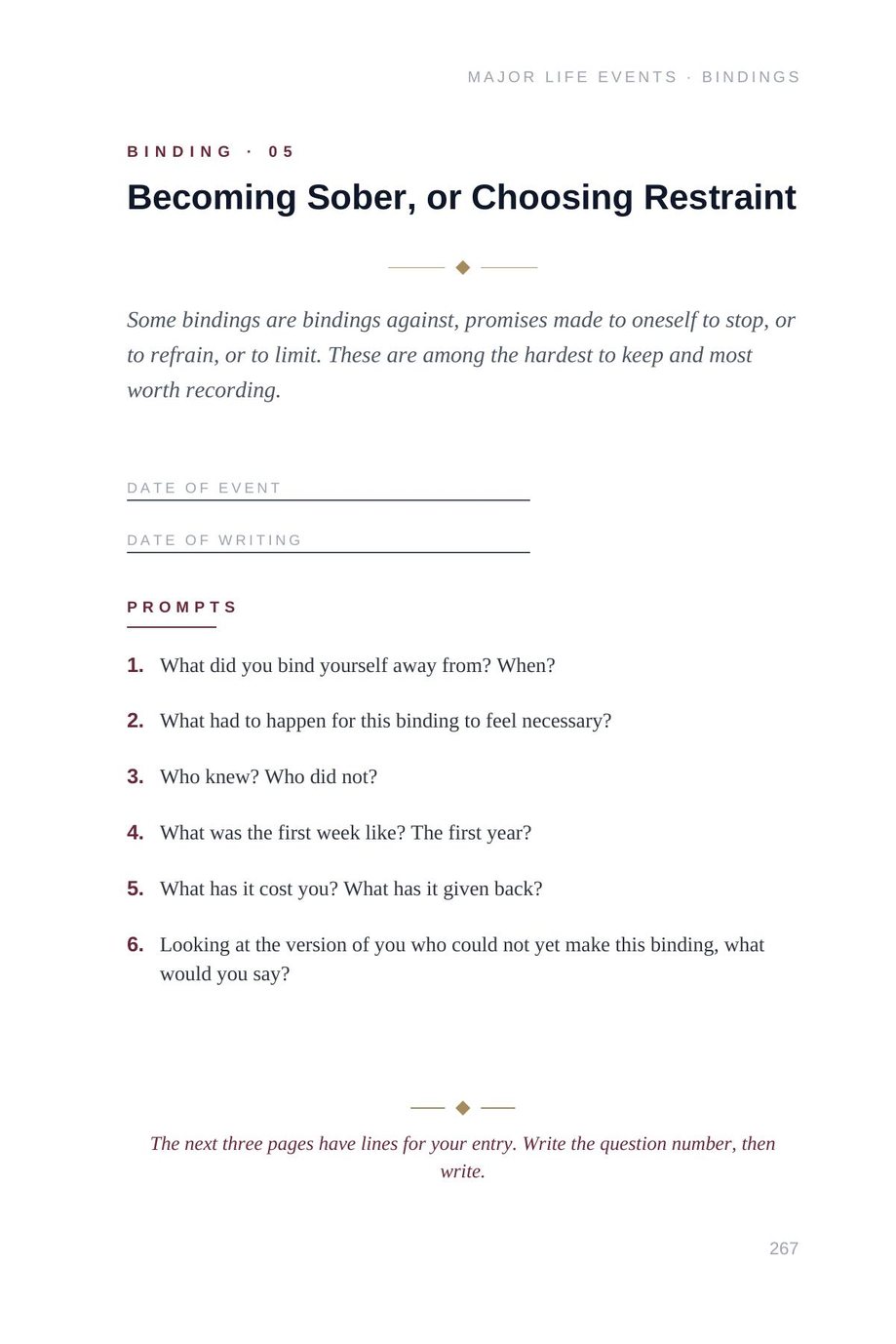
Some bindings are bindings against: promises made to oneself to stop, or to refrain, or to limit. The book files Becoming Sober, or Choosing Restraint among the Bindings rather than the Healings, and the placement is the insight: recovery is a healing, slow and retrospective, but the decision to stop is a binding, made on a day, and it deserves its own entry with its own date, written by the person who made it, while they still remember what it cost to make.
The day, and the day before
Bindings get a date of event, and for this one the date matters enormously and is often the only thing the person remembers clearly. Write it, and write the day before: what the last ordinary version looked like, what happened, what was said by whom, what you decided in which room. The entry is not a recovery story yet; it is the record of a decision, and decisions are recorded at the size they were on the day, before the years of keeping them add the weight.
Name the alternatives, because that is what a binding is
Every binding is written with the roads not taken, and the binding against has the clearest one: the version of the future in which you did not stop. Write it, honestly, without melodrama; what it would have cost, who it would have cost, how long it would have taken. That paragraph is the reason the binding holds on the bad days, and it is the paragraph the book asks for in every binding because a choice recorded with its cost is a choice made in full.
The cost of keeping it, and the return
The Bindings essay says these are among the hardest to keep, and the entry should say what keeping costs: the relationships that changed, the places that closed, the boredom, the identity that had to be rebuilt without the thing. Then the returns, dated: at ninety days, at a year, at five, under the original. Over time the binding entry and the Healings template for Recovery from Addiction or Compulsion become a pair, the decision and what it became, which the book calls one of the most important records it can hold, for the writer and for whoever reads it after.
Where it sits, and what goes with it
Becoming Sober, or Choosing Restraint is the fifth Bindings template. Its partner is the third Healings template, and its daily companion, for the year of keeping the promise one page at a time, is a different kind of book entirely. Bindings is the category; Healings holds the recovery; the book's note on hard material applies, and so does its plain statement that some healings are too large to write alone. The entry, in a certain hardcover, will be there at the ten-year return.
Lifetime Blueprint
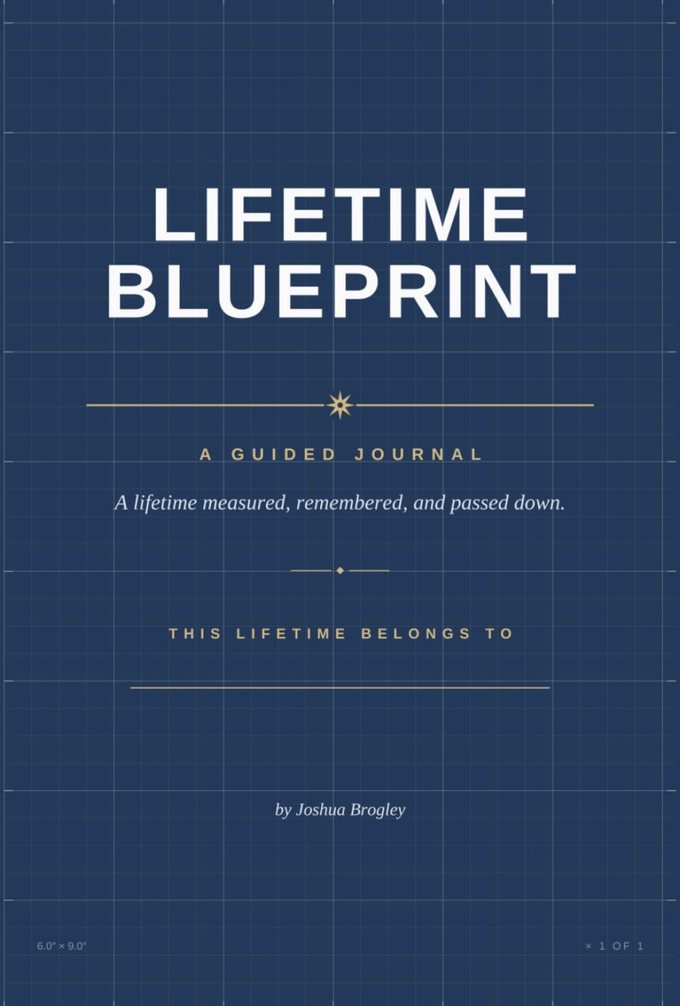
The hardcover built to be inherited: eight life domains scored across decades, thirty life-event templates, and letters written forward, ending in a Final Letter.
How do you write about getting sober?
As a binding: the date, the day before, the decision in the room where it was made, the future you were choosing against, and the cost of keeping it. Then dated returns at ninety days, a year and five, under the original.
Is sobriety a decision or a recovery?
Both, and the book records them separately: the decision to stop is a binding with a date, the recovery is a healing recorded slowly in retrospect. Together they are one of the most important records a person can leave.
More on Lifetime Blueprint
- Your Twenties: The Decade of Compounding Choices
- Your Thirties: The Building Decade, When Time Starts to Feel Finite
- Your Forties Are a Recalibration, Not a Crisis
- Your Fifties: The Distillation Decade, Subtraction Over Addition
- Why Most People Will Never Write Their Life Down
The method behind every book
- Which 365-Day Book Should I Start With? A One-Minute Guide
- What Is a No Zero Day? The Rule That Saves a Bad Week
- What Is a Realistic Morning Routine? Two Minutes, Not Two Hours
All articles about Lifetime Blueprint → · The book page → · All the books →
written by the author, at the kitchen table, after work.