Home / Blog / Lifetime Blueprint
LIFETIME BLUEPRINT
How to Write About the End of a Marriage (The Long Ending)
Part of the series The Six Kinds of Life Events Worth Writing Down
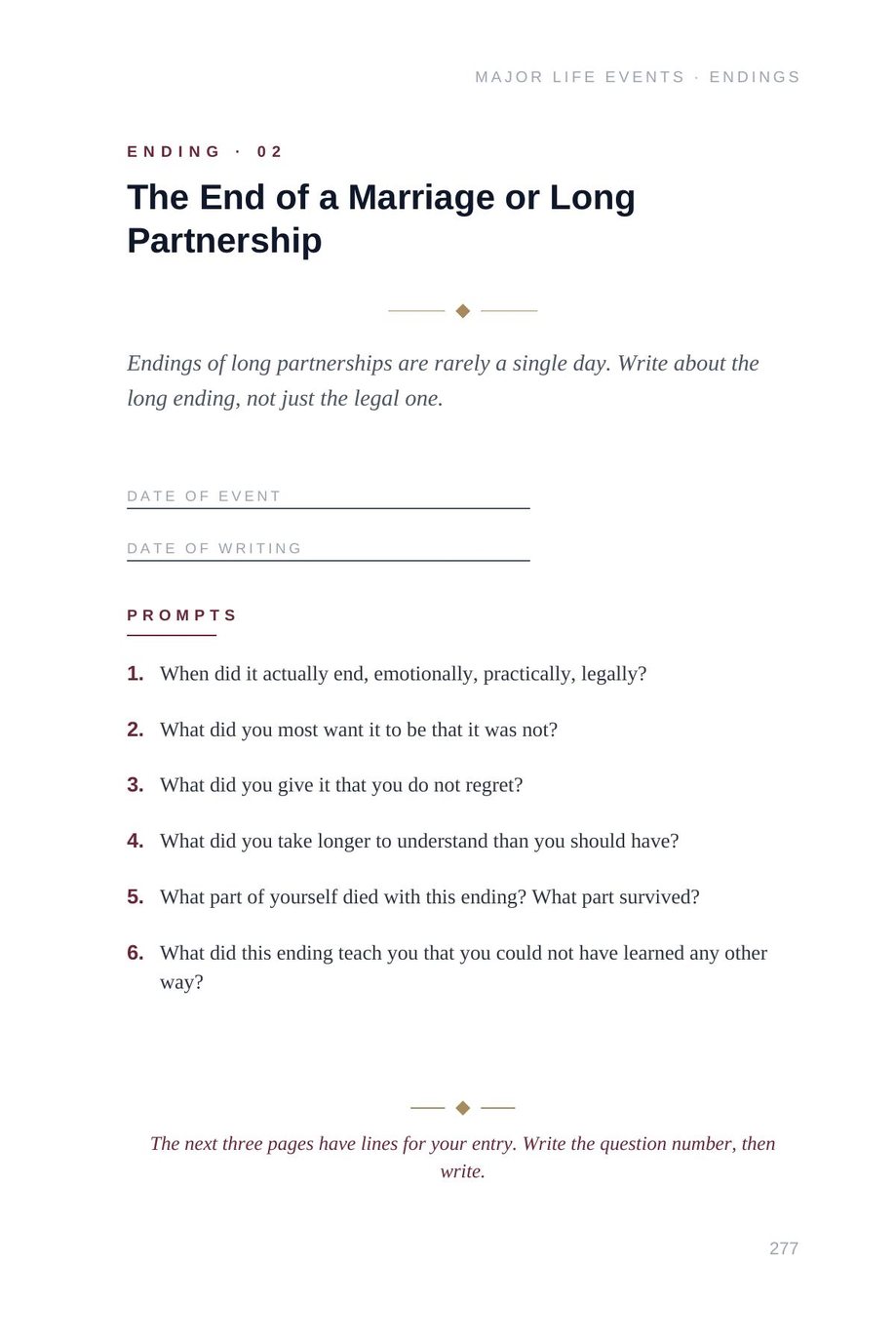
Endings of long partnerships are rarely a single day, and the template's instruction is to write the long ending, not just the legal one. The legal ending has a date and a document. The long ending has a beginning nobody noticed at the time, a middle in which things were tried, and an end that arrived long before the paperwork. Writing it honestly, while the fog is still fog, is one of the hardest entries in the book and one of the most protective, because the kindest later memory, or the cruelest, will otherwise be the only record either of you has.
Find where the ending began
The first prompt is the hardest: when did it start ending? Not the affair or the announcement, which are late chapters, but the season when the direction changed: the year the conversations got shorter, the trip that did not work, the thing that stopped being said. Most people cannot answer this in the first months and can answer it exactly a few years later, which is why the entry is written twice. The first version records the legal ending and the fog. The second, under it, finds the long one.
Write what was tried, and what was true
An ending recorded fairly includes the attempts: the conversations, the counseling, the year of trying, the things done well by both people inside a thing that was not working. And it includes what was true, which is the part the two edited versions, the noble one and the bitter one, both leave out. The book's rule for every ending is to remember it as it was, not as the kindest later memory will have it, and for a marriage the same protection runs against the harshest later memory, which is the one that arrives at two in the morning.
Write your part
The Endings and Turnings templates both ask for it in different words: what was your part? Not as confession and not as blame, but as record, because a future reader, possibly a child of the marriage, will want to know how you understood your own role, and because the person who can write their part is the person who can stop repeating it. Write it plainly and date it. Revise it in five years. The revision will be gentler and truer, and both belong on the page.
What comes after, in the same book
The end of a marriage is usually followed in the record by a Movement, sometimes a Turning, and, years later, by one of the Healings: Coming Home to Yourself, or A Letting Go, or, in some families, Reconciliation of a different kind. The book holds all of it in one section so that the ending can be read beside what it became. Endings is the category; Healings is where the story goes; skipping what you cannot yet face applies to this template more than most. The entry, in a certain hardcover, will outlast the fog.
Lifetime Blueprint
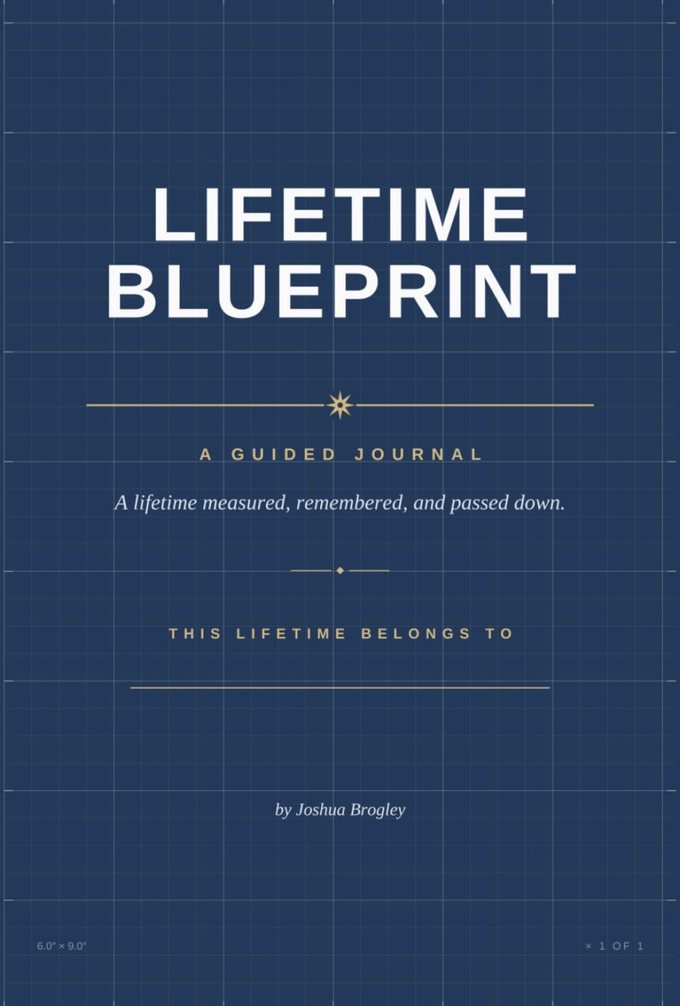
The hardcover built to be inherited: eight life domains scored across decades, thirty life-event templates, and letters written forward, ending in a Final Letter.
How do you write about a divorce?
Write the long ending, not the legal one: when it began ending, what was tried, what was true, and your part, plainly and dated. Write it twice, once in the fog and once years later under the first, so neither the kind nor the bitter version becomes the only record.
Should you write about your role in a marriage ending?
Yes, as record rather than confession or blame. It is what a future reader most wants to understand, and it is what stops the pattern repeating. Revise it in five years; both versions belong.
More on Lifetime Blueprint
- Your Twenties: The Decade of Compounding Choices
- Your Thirties: The Building Decade, When Time Starts to Feel Finite
- Your Forties Are a Recalibration, Not a Crisis
- Your Fifties: The Distillation Decade, Subtraction Over Addition
- Why Most People Will Never Write Their Life Down
The method behind every book
- Which 365-Day Book Should I Start With? A One-Minute Guide
- What Is a No Zero Day? The Rule That Saves a Bad Week
- What Is a Realistic Morning Routine? Two Minutes, Not Two Hours
All articles about Lifetime Blueprint → · The book page → · All the books →
written by the author, at the kitchen table, after work.