Home / Blog / Lifetime Blueprint
LIFETIME BLUEPRINT
How to Write About the Beginning of Your Marriage (It Was Not the Wedding)
Part of the series The Six Kinds of Life Events Worth Writing Down
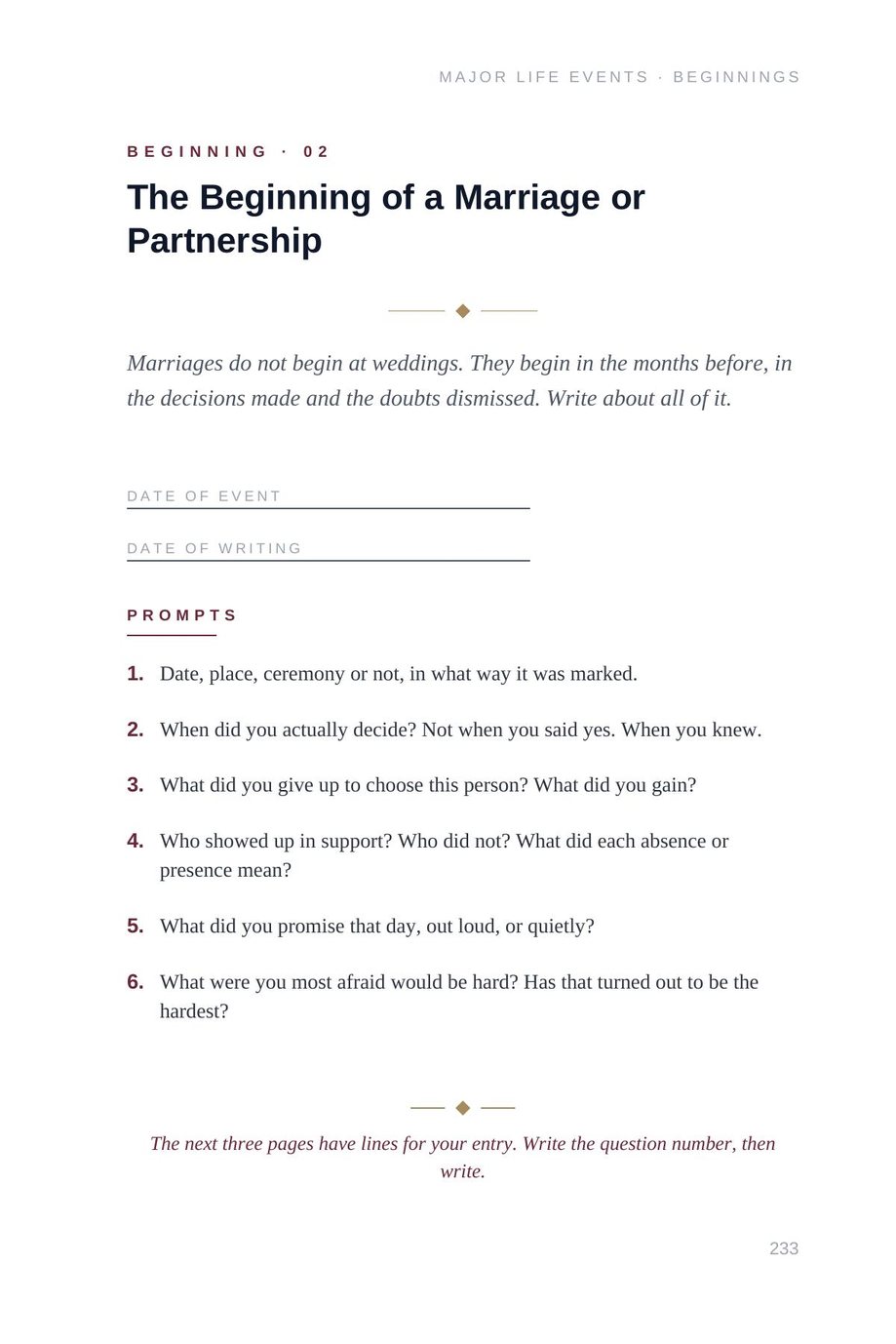
Marriages do not begin at weddings. They begin in the months before, in the decisions made and the doubts dismissed, in the conversation where one of you said the thing that settled it, in the ordinary evening when the question stopped being a question. The wedding has an album and a hundred witnesses. The beginning has one or two, and they are the only people who can write it. The template's instruction is to write about all of it, which means the doubts as well as the decision, because a beginning recorded without its doubts is a beginning nobody will believe later, least of all the two people who lived it.
Find the real start date
Before writing, decide when the marriage actually began, and expect the two of you to disagree; the disagreement is the first thing worth writing. The night one of you decided. The trip where it became obvious. The argument that proved it would survive arguments. The date of event on the template does not have to be the ceremony, and for most couples it is not. Writing the true start date is the act that turns the entry from a wedding record into a marriage record.
Write the doubts, and the dismissals
Every partnership that lasted had doubts at the beginning, and the record of them is not disloyalty; it is evidence that the choice was a choice. What did you worry about, specifically? What did you decide to overlook, and were you right? What did the people who loved you say, and what did you do with it? Years on, this is the most reassuring paragraph in the entry, because it proves the eyes were open. The kindest later memory will erase the doubts, and the entry exists to stop it.
The wedding paragraph, in one paragraph
Give the ceremony one paragraph and make it the texture the album cannot hold: what was said in the car, the thing that went wrong, the moment during the day when you were briefly alone, the first sentence spoken as a married person. Then leave it. The album has the rest, and the entry has a different job, which is the ground beneath the day. Return at the tenth anniversary and write, under the original, what the beginning turned out to have begun.
Where it sits
The Beginning of a Marriage or Partnership is the second Beginnings template, and it has two natural companions in the same book: the Letter to Your Partner in the letters section, which asks what you fell in love with that you have not said in years, and, if it comes to it, the Ending template that asks for the long ending rather than the legal one. Beginnings is the category; the letter to your partner is the companion; keeping the spark alive is the daily side. Together they sit in a certain hardcover that the two of you, and then your children, will keep.
Lifetime Blueprint
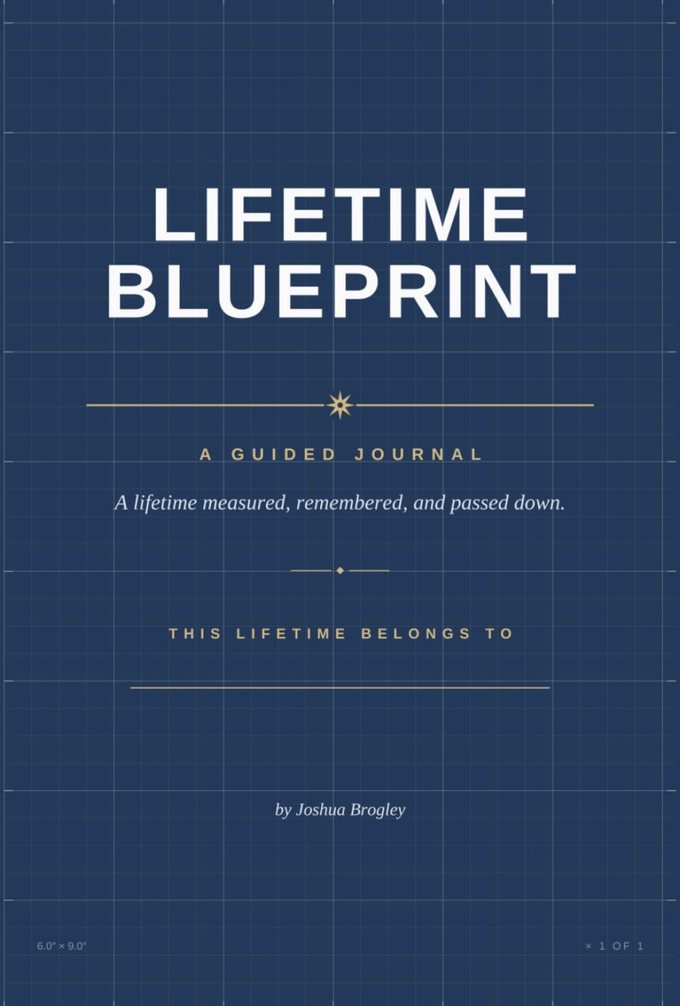
The hardcover built to be inherited: eight life domains scored across decades, thirty life-event templates, and letters written forward, ending in a Final Letter.
How do you write about the start of a relationship?
Find the real start date, which is rarely the wedding, and write the decisions made and the doubts dismissed in the months before. Give the ceremony one paragraph of texture the album cannot hold, then return at the tenth anniversary.
Should you write about doubts you had before getting married?
Yes. Doubts recorded are evidence the choice was made with open eyes, and they are the paragraph a couple most trusts years later. Memory will erase them; the entry keeps them honest.
More on Lifetime Blueprint
- Your Twenties: The Decade of Compounding Choices
- Your Thirties: The Building Decade, When Time Starts to Feel Finite
- Your Forties Are a Recalibration, Not a Crisis
- Your Fifties: The Distillation Decade, Subtraction Over Addition
- Why Most People Will Never Write Their Life Down
The method behind every book
- Which 365-Day Book Should I Start With? A One-Minute Guide
- What Is a No Zero Day? The Rule That Saves a Bad Week
- What Is a Realistic Morning Routine? Two Minutes, Not Two Hours
All articles about Lifetime Blueprint → · The book page → · All the books →
written by the author, at the kitchen table, after work.