Home / Blog / Lifetime Blueprint
LIFETIME BLUEPRINT
How to Write About a Career Pivot Before You Rationalize It
Part of the series The Six Kinds of Life Events Worth Writing Down
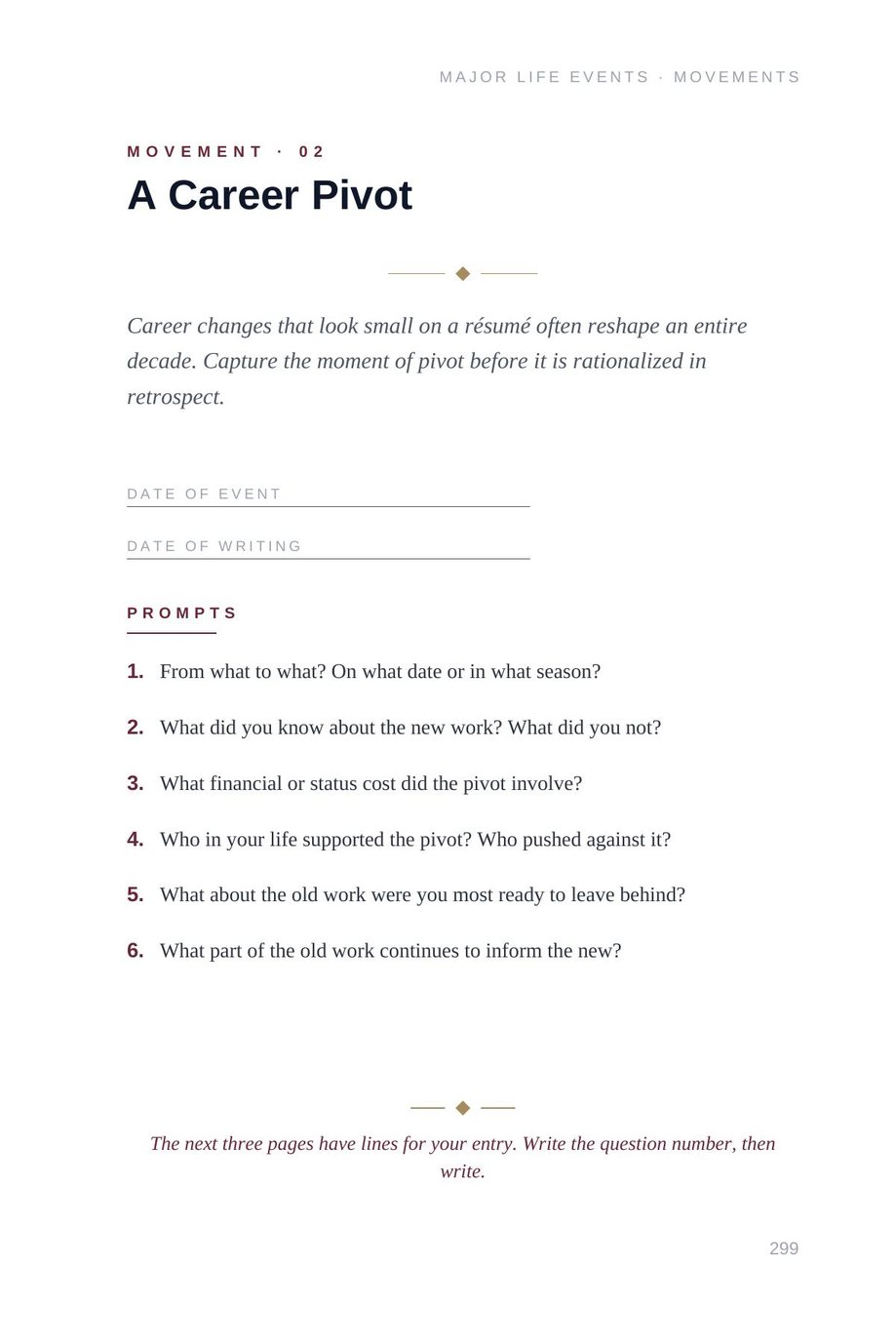
A career pivot looks small on a resume and often reshapes an entire decade, and it has a specific hazard that makes it worth writing fast: within a year the mind produces a clean story about why, and the clean story replaces the actual moment, which was messier, more accidental and more revealing. The template's instruction is exact: capture the moment of pivot before it is rationalized in retrospect. The rationalized version can be written later, under the first. The gap between the two is the record of how you make sense of your own life.
Write the moment, not the reasoning
The pivot has a moment: the meeting, the sentence someone said, the Sunday you could not face Monday, the message you sent before you had decided to send it. Write that, in detail, with the date. Reasoning comes afterward and is usually assembled to fit the decision; the moment came first and explains more. Readers who write the moment discover that the pivot they describe at dinner as strategic was, on the page, an escape or an accident or a kindness someone did them, and that discovery is the entry's value.
The leaving side, written honestly
A pivot is a Movement, and every movement has a leaving that weighs more than the arriving. What was left: the identity, the colleagues, the competence built over years, the title that other people understood. What was feared: the loss of standing, the money, the possibility of being bad at something again at forty. Write the fear at the size it was. A pivot recorded without its fear reads as courage and teaches nothing; recorded with it, it teaches exactly how courage worked, which is what the next pivot will need.
The arriving side, which nobody counts
Then the other account, separately: what was walked toward, what was gained, the first day, the first sign it was right or wrong. Gains are quieter than losses and go unrecorded unless the template forces them, which it does. And the five-year return: what the pivot turned out to be, whether it was also a turning, and what you now see about what was actually being decided. Most pivots, revisited, were about something other than the job.
Where it sits, and its neighbors
A Career Pivot is the second Movements template, and it is frequently written alongside two others: Leaving a Work, the Endings template for the job that defined a decade, and The Decision That Changed the Decade, when the pivot turns out to have been a turning. Movements is the category; leaving a work and Turnings are the neighbors; scoring your work life is where the pivot shows up as a number, before and after. The templates sit in the events section of a certain hardcover that will still hold the entry when the pivot is a line on an old resume.
Lifetime Blueprint
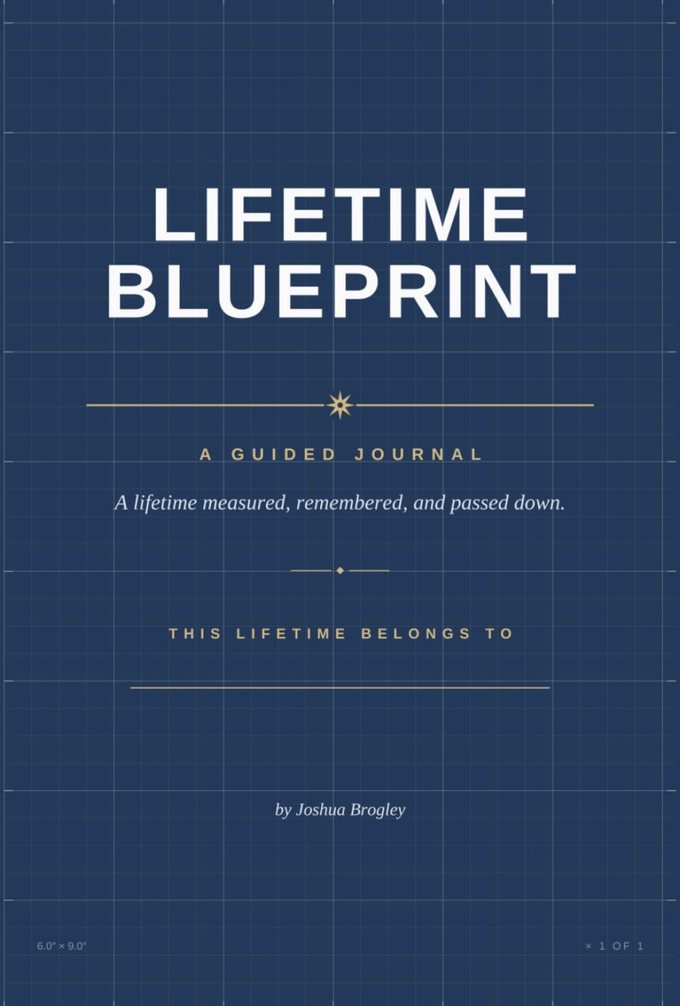
The hardcover built to be inherited: eight life domains scored across decades, thirty life-event templates, and letters written forward, ending in a Final Letter.
How do you document a career change?
Write the moment of pivot, not the reasoning: the meeting, the sentence, the Sunday. Then the leaving side, with the fear at full size, and the arriving side, separately. Return in five years and write what was actually being decided.
Why write about a job change before you understand it?
Because within a year the mind replaces the messy real moment with a clean story. The real moment explains more, and the gap between it and the later story is itself the most useful record.
More on Lifetime Blueprint
- Your Twenties: The Decade of Compounding Choices
- Your Thirties: The Building Decade, When Time Starts to Feel Finite
- Your Forties Are a Recalibration, Not a Crisis
- Your Fifties: The Distillation Decade, Subtraction Over Addition
- Why Most People Will Never Write Their Life Down
The method behind every book
- Which 365-Day Book Should I Start With? A One-Minute Guide
- What Is a No Zero Day? The Rule That Saves a Bad Week
- What Is a Realistic Morning Routine? Two Minutes, Not Two Hours
All articles about Lifetime Blueprint → · The book page → · All the books →
written by the author, at the kitchen table, after work.