Home / Blog / Lifetime Blueprint
LIFETIME BLUEPRINT
How to Write About a Diagnosis (The Day You Received the News)
Part of the series The Six Kinds of Life Events Worth Writing Down
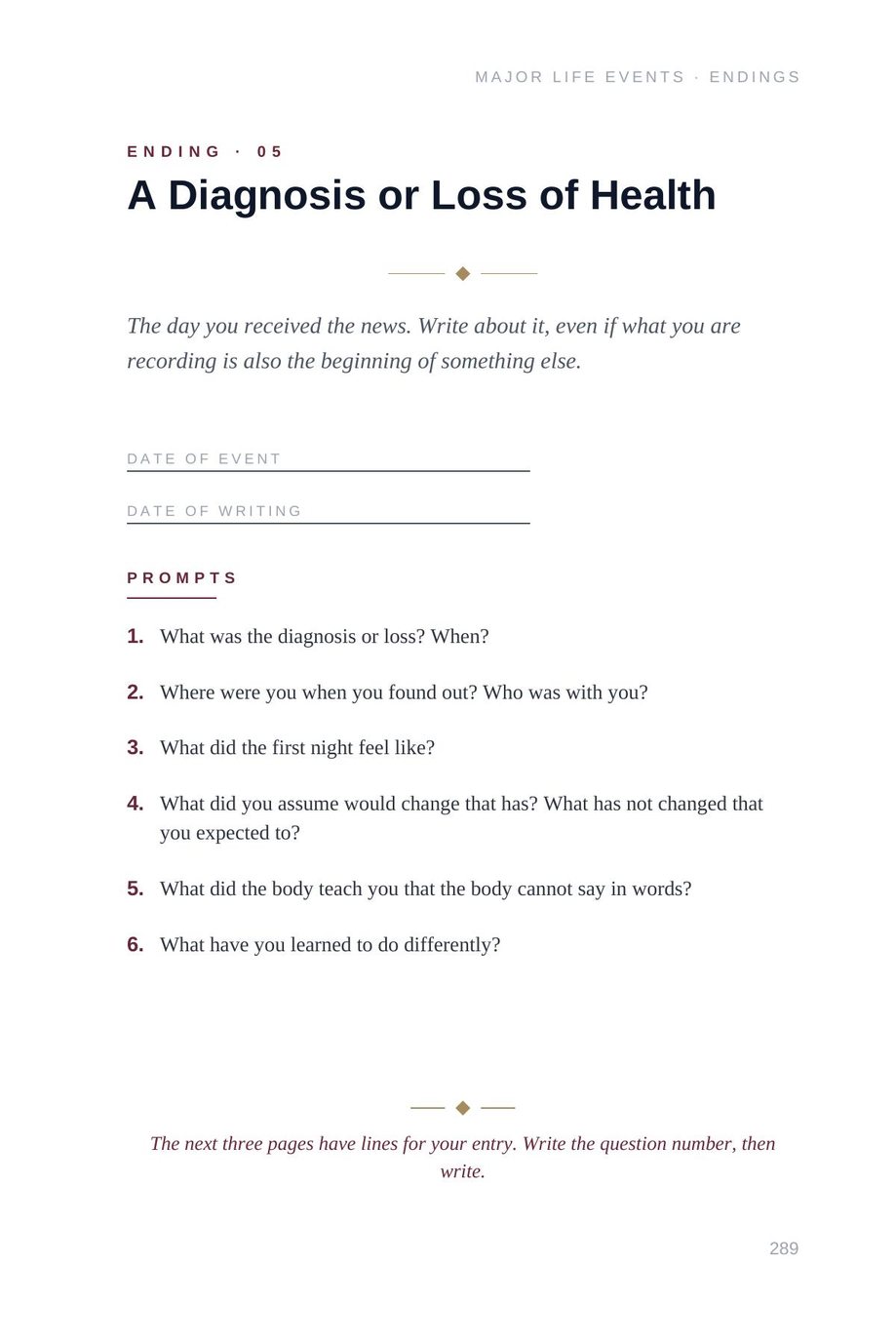
The template is titled A Diagnosis or Loss of Health, and its instruction is short: the day you received the news, write about it, even if what you are recording is also the beginning of something else. A diagnosis is an ending, of a body you assumed, a future you had scheduled, a version of yourself that was not a patient, and it is very often a beginning too, which is why the entry can feel impossible to place. Write the day. The categories can be sorted out later, and usually sort themselves.
Write the room and the words
The specific words the clinician used, as exactly as you can recall them, because they will be misremembered within a week and argued over within a year. Who was in the room. What you were looking at while it was said. What you asked, and what you did not ask. The first hour afterward, which most people spend on logistics and later cannot account for at all. This is the fact layer, and it is the layer that time erases fastest, so it is the layer to write first, badly, within days.
The meaning waits, and that is the design
What it means, for the years ahead, for the people, for the plans, is not known on the day, and the entry should not pretend otherwise. The prompts move from what happened to what it changed to what you know now, and the last is written later, under the first, at whatever interval the illness dictates. A diagnosis recorded in layers becomes, over time, either the beginning of a Healing entry or the long ending the Endings category holds; the book keeps both places open, and the writer decides which it was only when it is clear.
Write it for the people, too
A diagnosis is the entry future readers will most want and be least able to reconstruct: the children who were too young to be told, the partner who remembers it differently, the grandchild who inherits the condition and wants to know how you met it. The honest account, fear included, is the useful one. The book's instruction on hard material applies fully: write when you can, skip what you cannot, carry the largest parts to people and professionals as well as pages.
Where it sits, and what it can become
A Diagnosis or Loss of Health is the fifth Endings template, and its partner is the first Healings template, Recovery from an Illness, written from both ends: the day you knew you were sick, the season you knew you were well. Many entries begin in one and finish in the other. Endings is the category; Healings is the hope; scoring health is how a diagnosis shows up in the decade's numbers, as a phase rather than a verdict. The entry belongs in a certain hardcover built to hold both halves.
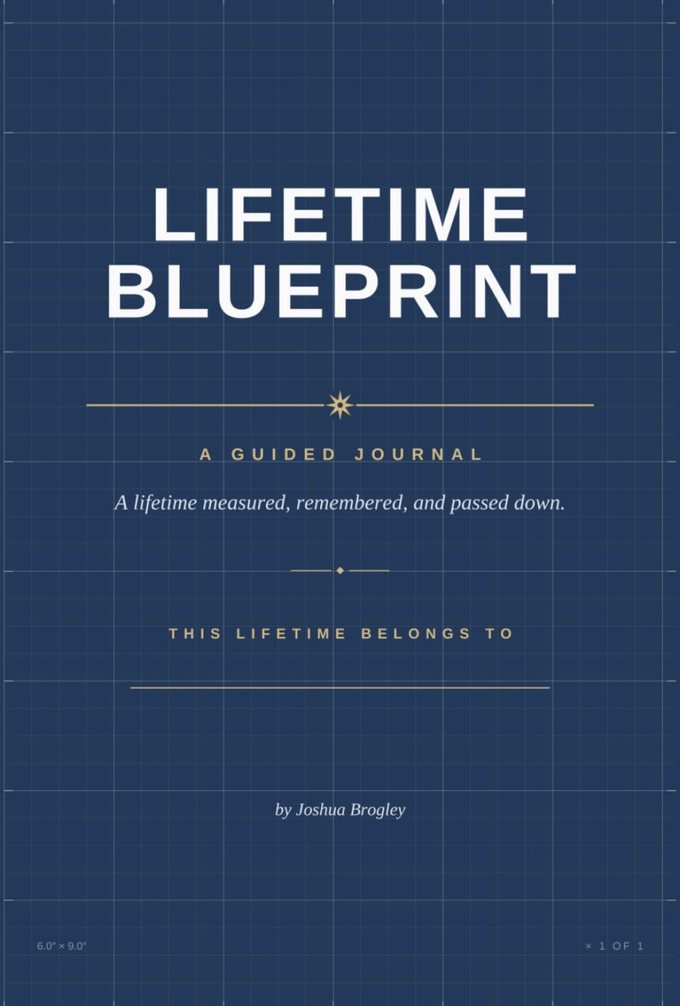
Lifetime Blueprint
The hardcover built to be inherited: eight life domains scored across decades, thirty life-event templates, and letters written forward, ending in a Final Letter.
How do you write about receiving a diagnosis?
The room, the exact words used, who was there, what you asked and did not ask, and the first hour, written within days as fact. The meaning is written later under the first entry, at whatever interval the illness sets.
Is a diagnosis an ending or a beginning?
Often both. The book files it under Endings with a partner template in Healings, Recovery from an Illness, and the writer decides which it was only when it becomes clear. Write the day first; the category sorts itself.
More on Lifetime Blueprint
- Your Twenties: The Decade of Compounding Choices
- Your Thirties: The Building Decade, When Time Starts to Feel Finite
- Your Forties Are a Recalibration, Not a Crisis
- Your Fifties: The Distillation Decade, Subtraction Over Addition
- Why Most People Will Never Write Their Life Down
The method behind every book
- Which 365-Day Book Should I Start With? A One-Minute Guide
- What Is a No Zero Day? The Rule That Saves a Bad Week
- What Is a Realistic Morning Routine? Two Minutes, Not Two Hours
All articles about Lifetime Blueprint → · The book page → · All the books →
written by the author, at the kitchen table, after work.