Home / Blog / Lifetime Blueprint
LIFETIME BLUEPRINT
How to Write About a Failure So It Actually Teaches You
Part of the series The Six Kinds of Life Events Worth Writing Down
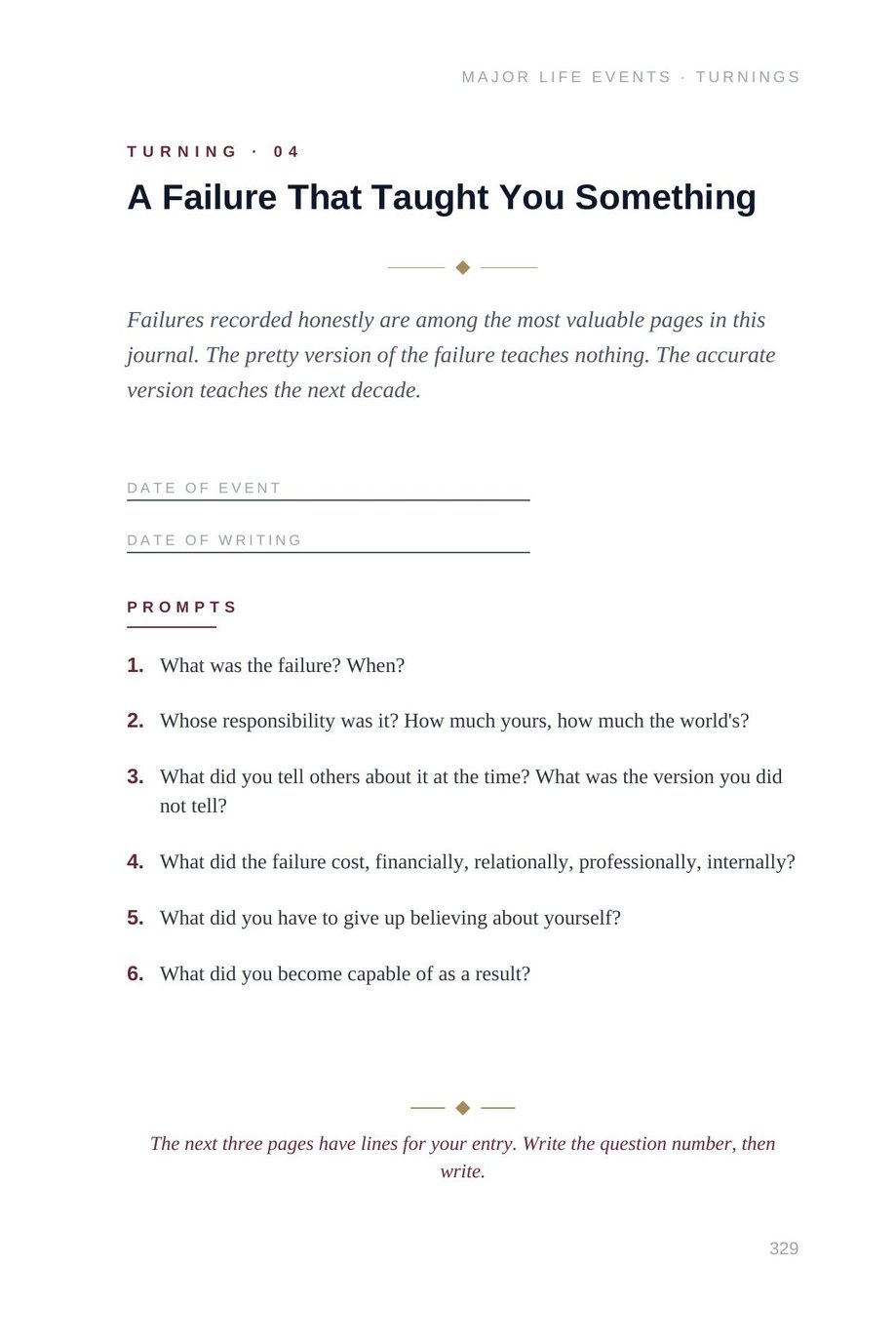
Failures recorded honestly are among the most valuable pages in a lifetime record, and the template says why in two sentences: the pretty version of the failure teaches nothing, the accurate version teaches everything. Almost everyone owns several pretty versions, polished over years of retelling until the failure has become a charming anecdote with a moral. The accurate version is the one that still stings, and it is the only one that contains the information: what you actually did, what you told yourself while doing it, what it cost, and what you would have needed to know.
Write what you did, not what happened to you
The pretty version is passive: the market turned, the partner bailed, the timing was wrong. The accurate version has a subject, and the subject is you: what you decided, what you ignored, which warning you explained away, which conversation you avoided. This is not self-punishment; it is the only part of the story with leverage, because it is the only part that can be done differently. A failure written without your decisions in it is weather, and nobody learns from weather.
Write what you told yourself at the time
The most educational line in any failure entry is the story you were running while it happened: the reason it was going to be different, the reason the advice did not apply, the reason it was not yet time to stop. Write that story in its own words, as you believed it. It will be uncomfortably familiar the next time it starts, which is the entire mechanism of learning from a failure, and the reason the template is filed under Turnings rather than Endings: a failure honestly written turns the direction of what comes next.
The cost, and the five-year return
Name the cost plainly: money, years, a relationship, a reputation, a version of yourself. Then leave the meaning for the return. Five years on, under the original, write what the failure turned out to have taught, which is rarely the lesson you assigned it in the first month. Readers who keep this template say the second entry is often kinder and always more precise than the first, and that the pair together is the most useful thing they have written about themselves.
Where it sits, and its companions
A Failure That Taught You Something is the fourth Turnings template, beside The Decision That Changed the Decade, A Breakthrough in Understanding, A Confrontation That Mattered and A Moment of Grace. Turnings is the category; bouncing back is the daily side; why regret costs more than failure is the argument for attempting the next one. The template, with its two dates and the split between then and now, sits in a certain hardcover built for the return.
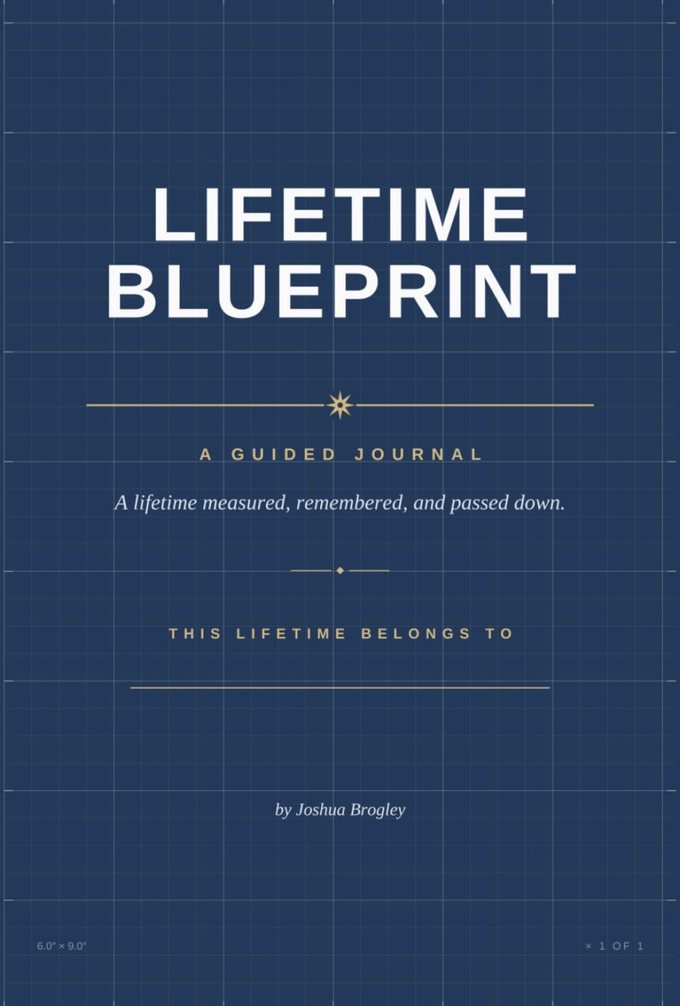
Lifetime Blueprint
The hardcover built to be inherited: eight life domains scored across decades, thirty life-event templates, and letters written forward, ending in a Final Letter.
How do you learn from failure by writing about it?
Write the accurate version, not the pretty one: what you decided and ignored, the story you told yourself while it happened, and what it cost. Return five years later and write what it actually taught, under the original.
Why do people not learn from their failures?
Because the failure gets retold as a passive anecdote with a moral until the decisions inside it disappear. A failure written with the writer as the subject, and the self-story named, is the version that changes the next attempt.
More on Lifetime Blueprint
- Your Twenties: The Decade of Compounding Choices
- Your Thirties: The Building Decade, When Time Starts to Feel Finite
- Your Forties Are a Recalibration, Not a Crisis
- Your Fifties: The Distillation Decade, Subtraction Over Addition
- Why Most People Will Never Write Their Life Down
The method behind every book
- Which 365-Day Book Should I Start With? A One-Minute Guide
- What Is a No Zero Day? The Rule That Saves a Bad Week
- What Is a Realistic Morning Routine? Two Minutes, Not Two Hours
All articles about Lifetime Blueprint → · The book page → · All the books →
written by the author, at the kitchen table, after work.