Home / Blog / Lifetime Blueprint
LIFETIME BLUEPRINT
How to Write a Letter to a Parent, Living or Not
Part of the series Letters Forward: The Eleven Letters Everyone Should Write
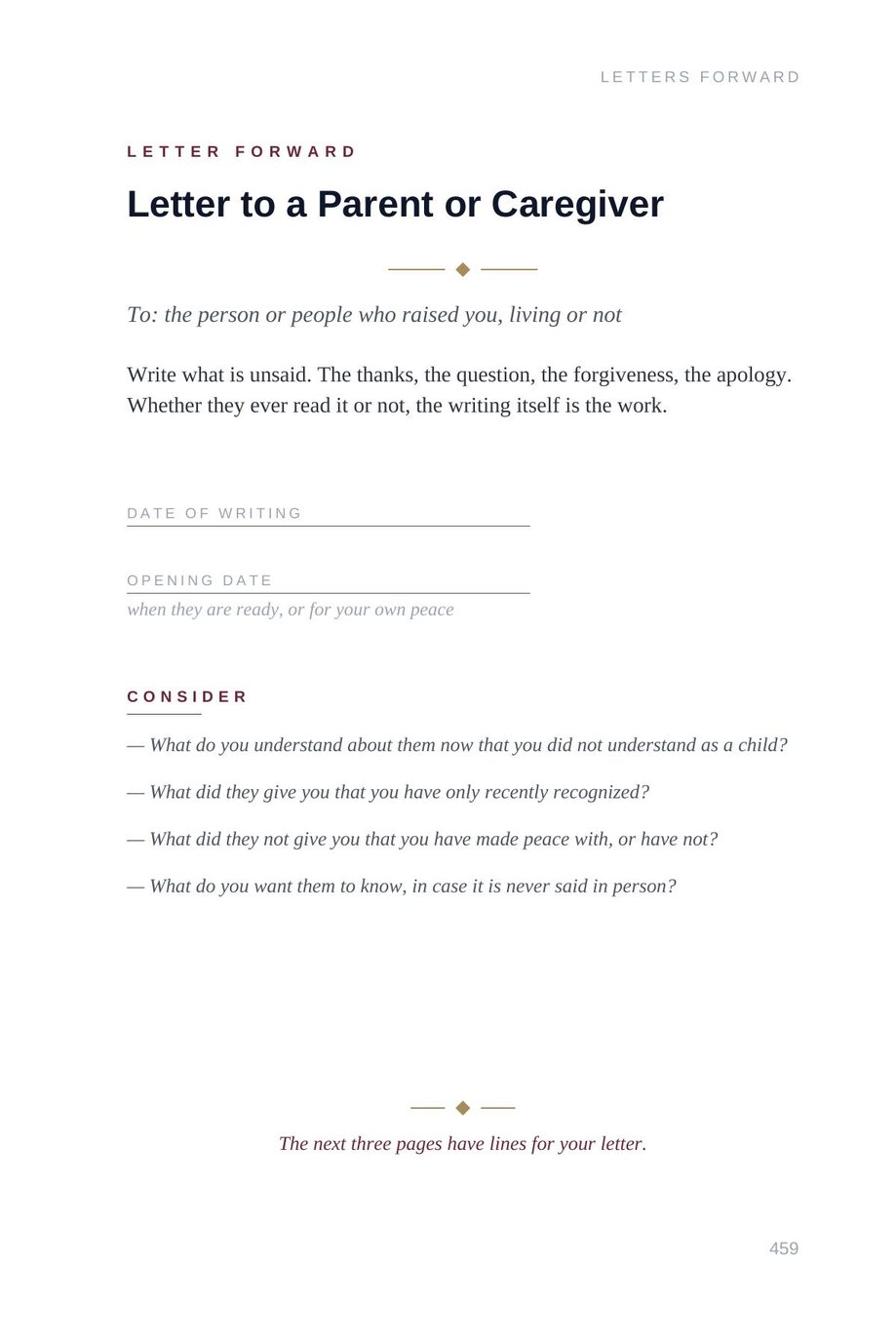
The letter to a parent or caregiver is addressed to the person or people who raised you, living or not, and its instruction is to write what is unsaid: the thanks, the question, the forgiveness, the apology. Whether they ever read it or not, the writing itself is the work. The opening date is either when they are ready, or for your own peace, and the second option is why this letter exists in a book rather than an envelope: a great many of them are written to people who are gone, and they are no less real for that.
The four questions
What do you understand about them now that you did not understand as a child? This is the question most people can only answer after having children, or reaching the age their parent was, and it is the reason the letter is often written at forty. What did they give you that you have only recently recognized? What did they not give you that you have made peace with, or have not; the template allows both answers, and the honest one is often the second. And what do you want them to know, in case it is never said in person?
Read parents broadly, as the book does
The book's own language note applies: parents means the people who raised you, biological, adoptive, foster or chosen, and the letter is written to whoever did the raising. For some readers that is two letters, or three. For some it is a letter to a grandparent or an aunt who did the work. The template is one page and can be copied by hand onto the next; the address line is what matters, and it can name anyone.
Writing to the living, and to the dead
To the living, the letter can be handed over, and the question is whether to. Some hand it over on a birthday; some keep it sealed for the funeral they will speak at; some, following the book's harder practice, say it out loud instead and keep the letter as the record. To the dead, the letter is for your own peace, and it works the way the unsent letter works: it names what was never said, it is dated, and it does not need a reader to finish its job. Readers describe it as the entry that changed how they thought about their own children, which is the letter's quiet second purpose.
Where it sits, and what surrounds it
The letter to a parent is the sixth of the eleven letters forward, and it sits in a book that has already asked you, in the People Who Matter section, how many more times you will see them, and, in the Childhood chapter, to separate what they gave you from the story you have told about it. All eleven letters; the remaining-visits math; the questions to ask while you can; saying it out loud. The letter's page, with its two dates, sits among them in a certain hardcover.
Lifetime Blueprint
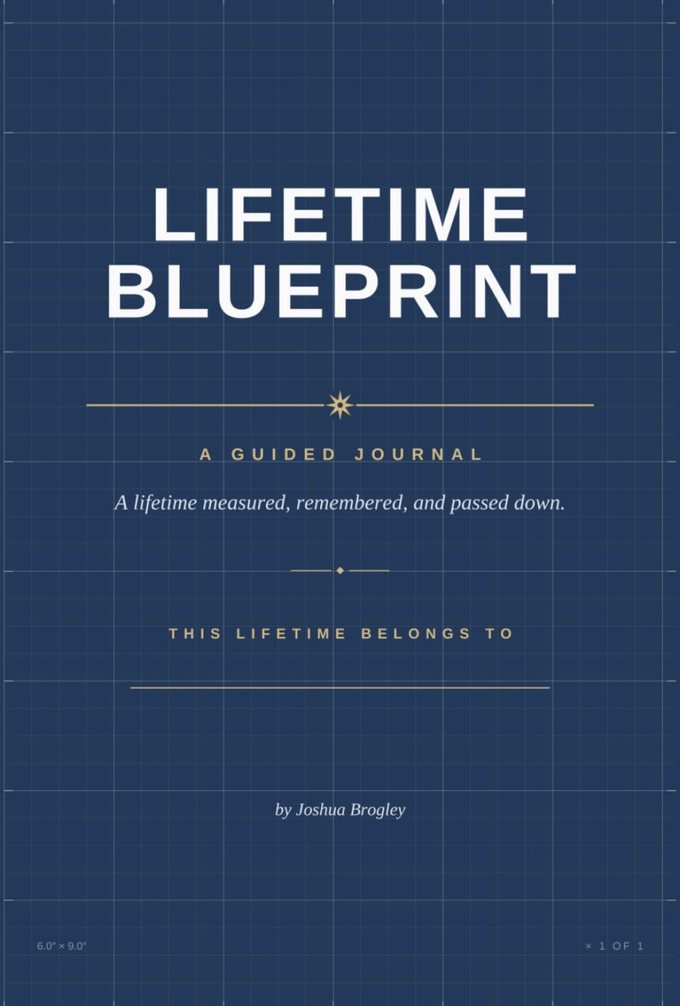
The hardcover built to be inherited: eight life domains scored across decades, thirty life-event templates, and letters written forward, ending in a Final Letter.
What do you write in a letter to your parents?
What you understand about them now that you did not as a child, what they gave you that you only recently recognized, what they did not give you and whether you have made peace with it, and what you want them to know in case it is never said in person.
Can you write a letter to a parent who has died?
Yes, and the template expects it: the opening date is for your own peace. The letter names what was never said, is dated, and does not need a reader to do its work.
More on Lifetime Blueprint
- Your Twenties: The Decade of Compounding Choices
- Your Thirties: The Building Decade, When Time Starts to Feel Finite
- Your Forties Are a Recalibration, Not a Crisis
- Your Fifties: The Distillation Decade, Subtraction Over Addition
- Why Most People Will Never Write Their Life Down
The method behind every book
- Which 365-Day Book Should I Start With? A One-Minute Guide
- What Is a No Zero Day? The Rule That Saves a Bad Week
- What Is a Realistic Morning Routine? Two Minutes, Not Two Hours
All articles about Lifetime Blueprint → · The book page → · All the books →
written by the author, at the kitchen table, after work.