Home / Blog / Lifetime Blueprint
LIFETIME BLUEPRINT
How to Write the Final Letter: To the People You Most Loved
Part of the series Letters Forward: The Eleven Letters Everyone Should Write
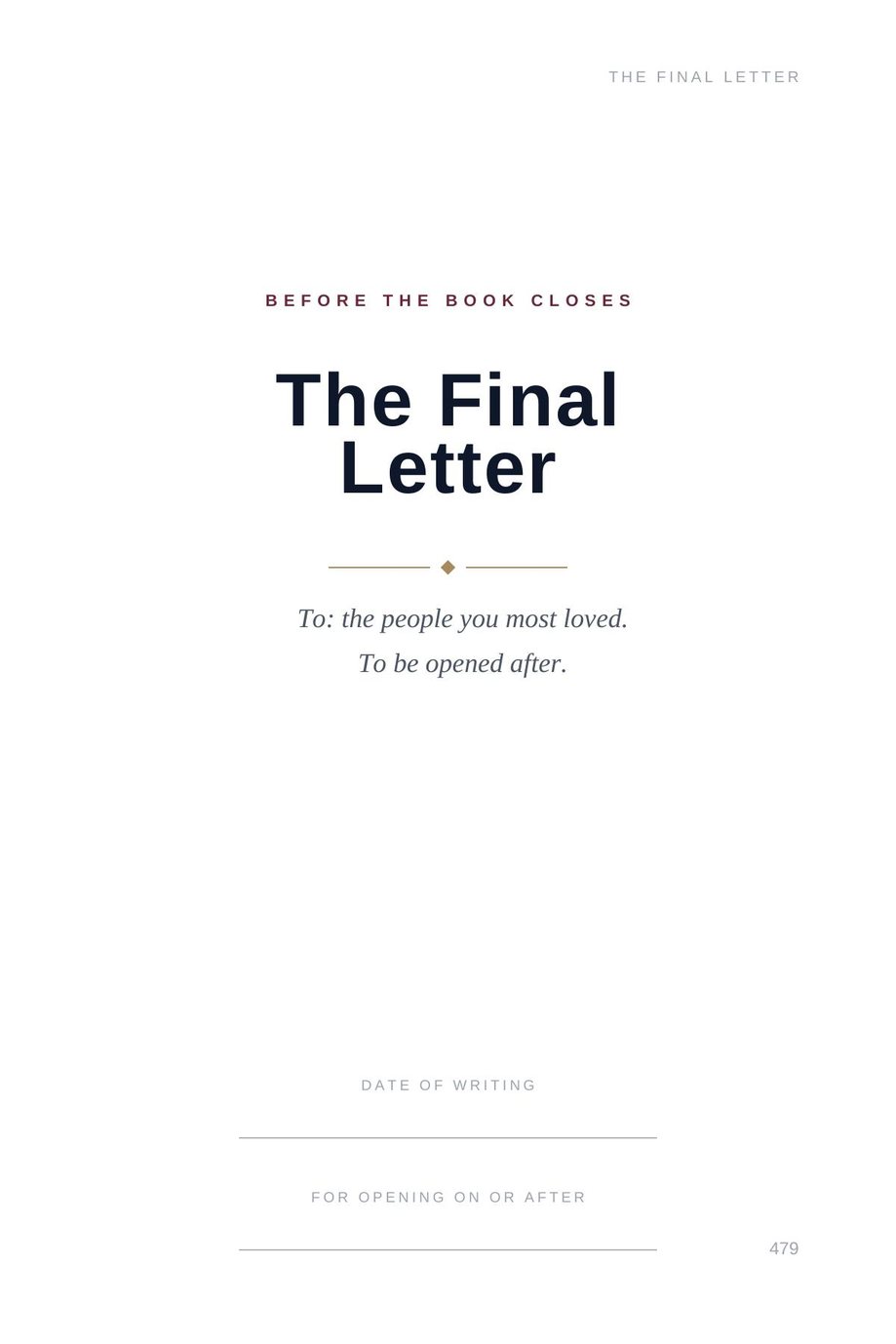
The Final Letter is the last thing in the book that asks anything of you. Most of what came before was for the writer; this is for the people the writer leaves behind. Write only when you are ready, and the book is unusually specific about what ready can mean: some write it in their fifties as an exercise in clarity, some in their seventies, slowly, across many sittings, some in the last weeks of their life, and all three are correct. Address it to the people who most need to receive it, the spouse, the children, the grandchildren, the closest friends, or simply to whoever opens this book after I am gone. Write what would not otherwise be said.
The questions to consider
What do you most want them to know that they may not already? What do you forgive that perhaps remained unspoken; forgiveness given in a final letter reaches people no conversation could. What do you most regret, and what are you most at peace with, asked together because the pair is more honest than either alone. What would you bless them with, for the days you cannot share? And the last, which the book saves for the end: if you could leave them with one sentence, what would it be? The lined pages follow, beginning with Dear and ending with With love, and the rest is yours.
The fifties version: clarity
Writing the Final Letter at fifty, with decades presumably left, is not morbid; it is the most efficient life-audit the book contains. Asked what you would leave your family with in one sentence, you discover in an hour what you actually value, which the eight domain scores took a whole sitting to approximate. Readers who write it early describe it as the page that reordered their fifties, and they rewrite it at seventy with the earlier version still there, dated, underneath. The book is explicit that the first version is not final; the letter is a draft until it is not.
The seventies version, and the last-weeks version
Across many sittings, a paragraph after a conversation, a sentence after a loss: the legacy decades write everything in flashes and this letter especially, because it cannot be forced and does not need to be. And the last-weeks version, which some people write with help, dictated, or in a hand that has changed, is the one the family reads most and treats as scripture. The book's only instruction across all three is the same: write what would not otherwise be said, which excludes almost everything a person is tempted to put in and includes the three or four things they never did.
Where it sits: before the book closes
The Final Letter is the eleventh letter and the closing act of the book, placed just before the reference pages and after the unsent letter, so that the harm is set down before the love is written. It is the reason the book is hardback, the reason it tells you to inscribe the inside cover and tell one person where it is, and the reason it was built to be inherited. All eleven letters; the fuller method for a letter opened after death; the finished book and what to do with it; the decades in which it is usually written. Its two lined pages, opening with Dear and closing with With love, are the last pages of a certain hardcover that asks for them.
Lifetime Blueprint
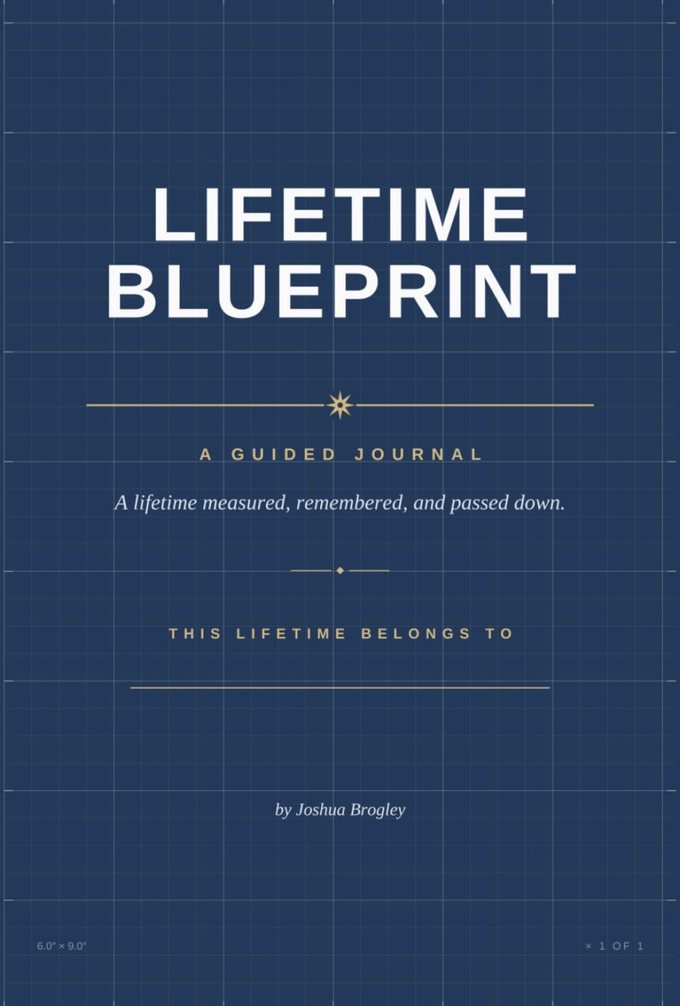
The hardcover built to be inherited: eight life domains scored across decades, thirty life-event templates, and letters written forward, ending in a Final Letter.
What do you write in a final letter to your family?
What they may not already know, what you forgive that went unspoken, what you most regret and are most at peace with, a blessing for the days you cannot share, and, if you could leave one sentence, that sentence. Write what would not otherwise be said.
When should you write a final letter?
In your fifties as an exercise in clarity, in your seventies across many sittings, or in the last weeks of life. The book says all three are correct, and the early version can be rewritten with the first left dated beneath it.
More on Lifetime Blueprint
- Your Twenties: The Decade of Compounding Choices
- Your Thirties: The Building Decade, When Time Starts to Feel Finite
- Your Forties Are a Recalibration, Not a Crisis
- Your Fifties: The Distillation Decade, Subtraction Over Addition
- Why Most People Will Never Write Their Life Down
The method behind every book
- Which 365-Day Book Should I Start With? A One-Minute Guide
- What Is a No Zero Day? The Rule That Saves a Bad Week
- What Is a Realistic Morning Routine? Two Minutes, Not Two Hours
All articles about Lifetime Blueprint → · The book page → · All the books →
written by the author, at the kitchen table, after work.