Home / Blog / Lifetime Blueprint
LIFETIME BLUEPRINT
How Do I Write My Life Story If I Am Not a Writer?
You do not need to be a writer to write your life story; you need a scaffold that asks the right questions in the right order. Score each decade you have lived. Record the ten or fifteen events that actually turned the plot. Write letters to the people who will read it instead of chapters for strangers. Lifetime Blueprint is that scaffold: 492 guided pages where every section has a prompt, a structure, and a place, so the story assembles itself while you answer questions.
The blank page is the enemy, so remove it
Memoirs die at "Chapter One." A guided structure never shows you a blank page: it shows you a question. What defined your thirties? Who was there the year it fell apart? A question you can answer beats a chapter you cannot start.
Decades are the natural chapters
The Blueprint gives every decade from your twenties onward its own scored reflection: how it felt while you lived it, how it reads now, and the two or three events that made it what it was. Seven honest decade entries are a life story, whether or not you ever call them one.
Letters beat chapters
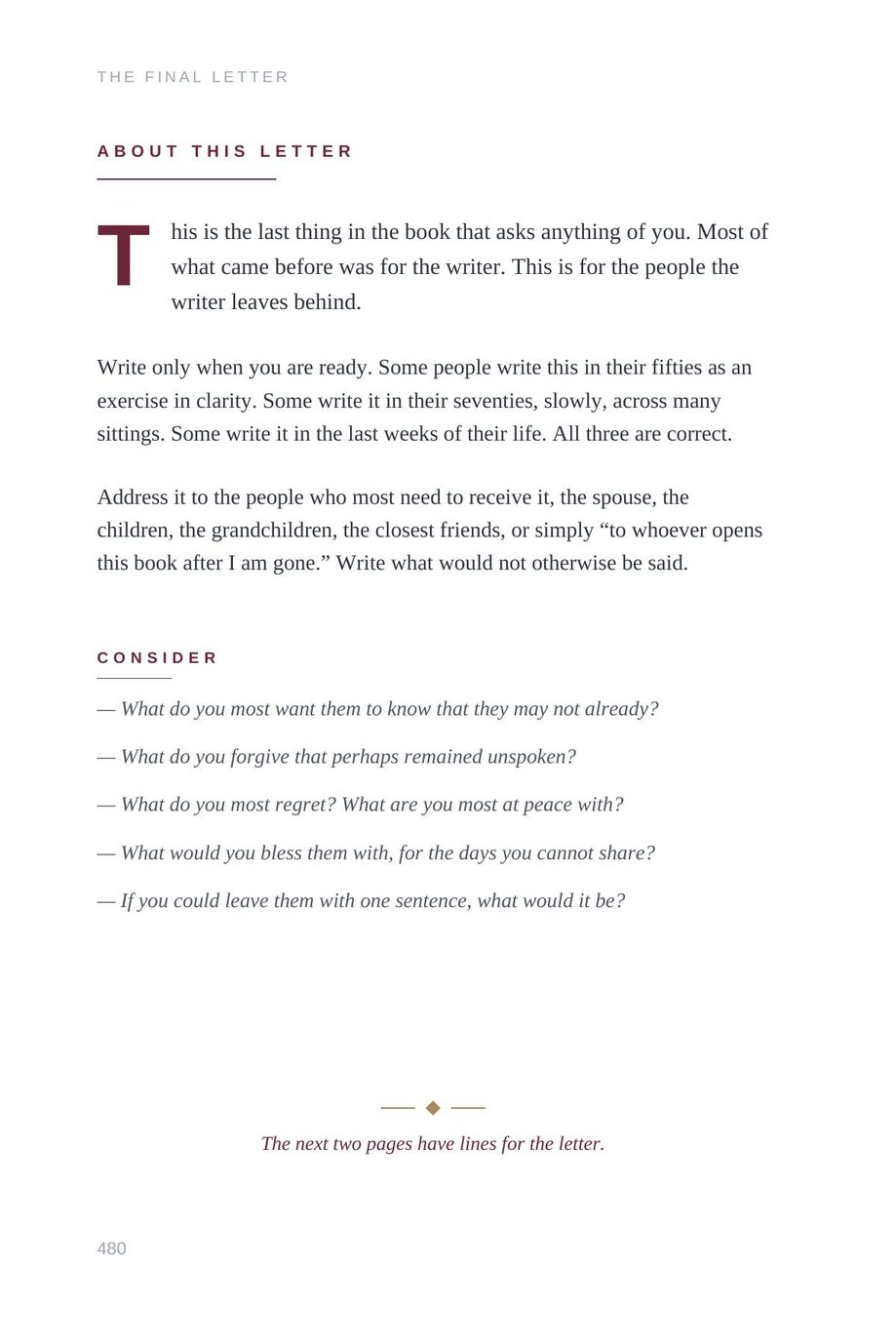
A chapter is written for nobody in particular, which is why it is impossible. A letter to your daughter about the year she was born writes itself in twenty minutes. The Blueprint holds eleven of them, ending in a Final Letter, which is the last page of any life story that matters.
What you would actually be buying
Not a notebook: an architecture. Eight scored life domains, seven decade reflections, thirty event templates, twelve five-year snapshots, eleven letters, in a hardcover built to be inherited. Related: starting a family record from your own life and what a lifetime journal is.
Lifetime Blueprint
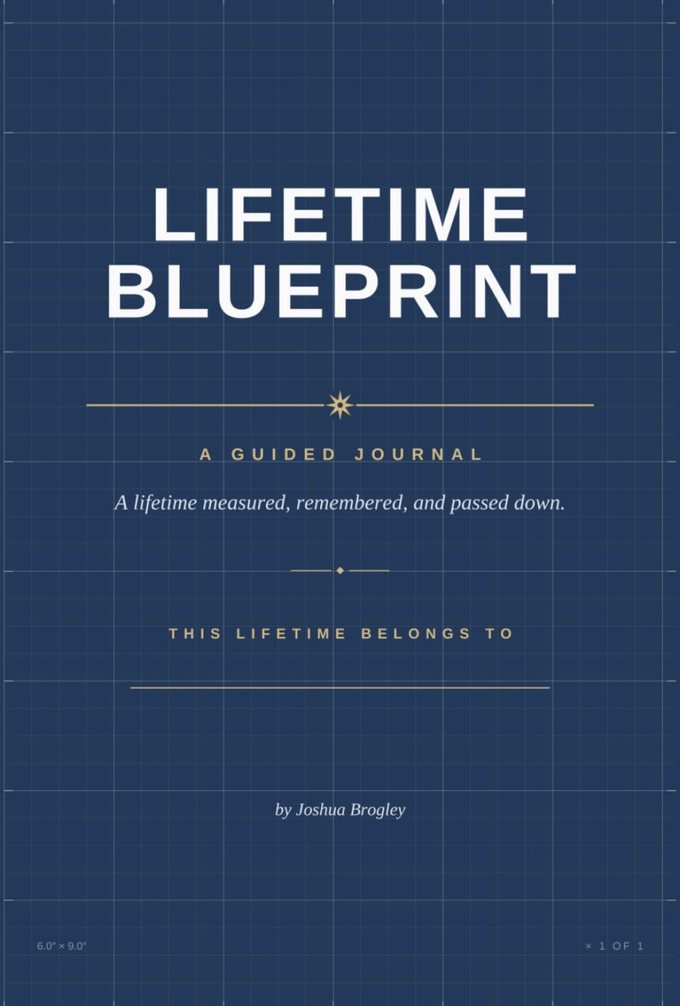
A guided journal built for the long arc of a life: eight domains, seven decades, twelve snapshots, eleven letters, one record honest enough to be inherited.
How do I start writing my life story?
Not at birth. Start with one honest measurement of where you are now, then work backward a decade at a time. Chronology is for the reader; discovery works in the other direction.
What if my life does not feel interesting enough?
Every life reads as ordinary from the inside. Your grandchildren will not think the year everything went wrong was ordinary. Interesting is not the bar; true and specific is, and prompts get you there.
More on Lifetime Blueprint
- Your Twenties: The Decade of Compounding Choices
- Your Thirties: The Building Decade, When Time Starts to Feel Finite
- Your Forties Are a Recalibration, Not a Crisis
- Your Fifties: The Distillation Decade, Subtraction Over Addition
- Why Most People Will Never Write Their Life Down
The method behind every book
- Which 365-Day Book Should I Start With? A One-Minute Guide
- What Is a No Zero Day? The Rule That Saves a Bad Week
- What Is a Realistic Morning Routine? Two Minutes, Not Two Hours
All articles about Lifetime Blueprint → · The book page → · All the books →
written by the author, at the kitchen table, after work.