Home / Blog / Step The F*ck Up
STEP THE F*CK UP
What Is an Excuse? A Verdict Wearing a Constraint's Clothes
An excuse is a real constraint inflated into a verdict. Time is short, money is tight, you are tired, you are older than the people in the photographs: all true, all constraints, and a constraint is a thing you plan around. The excuse is what happens when the constraint is promoted to a reason not to plan at all, and the promotion goes unchallenged because everyone around you is running the same lines. The book's first month is a definition delivered thirty-one times: every excuse is a check your future self has to cash. Here is the ladder: define it, recognize it in your own day, face it, make a plan small enough to survive, take control by deciding once, act, and let a daily page do the repetition.
Define it, then recognize it
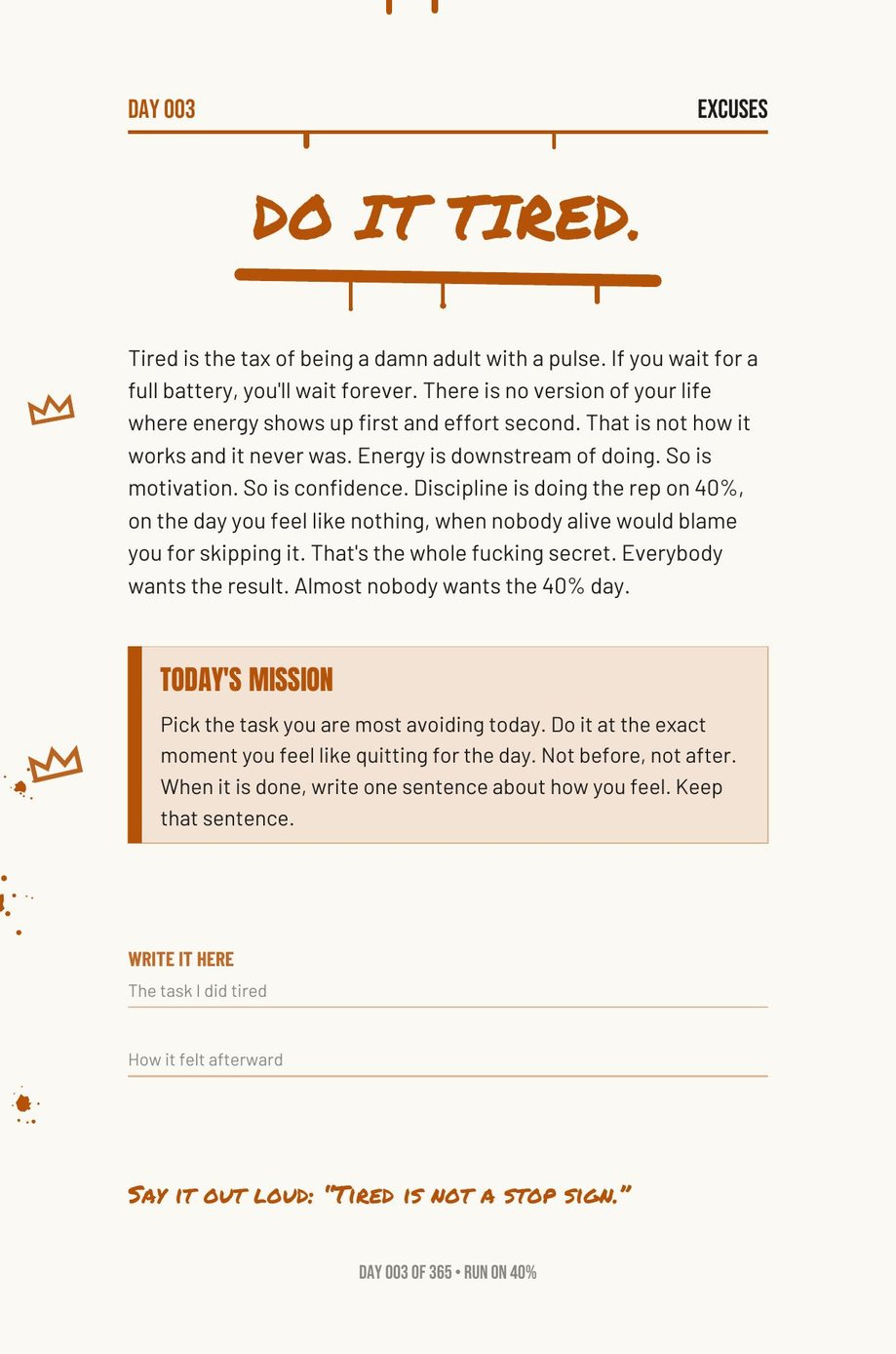
Constraint: I have forty minutes today. Excuse: I don't have time. Constraint: I'm at forty percent. Excuse: I'm too tired. The difference is that a constraint has a number and an excuse has a verdict, and the recognition test is exactly that: can this be measured? The book's Day 3 page is the cleanest example, do it tired, because tired is the tax of being an adult with a pulse, energy is downstream of doing rather than upstream of it, and discipline is the rep done on forty percent. If the sentence ends the conversation rather than starting a plan, it was an excuse.
Face it: check the inflation
Each excuse gets tested against evidence, which is what kills it. I don't have time meets the screen-time report. Too old meets one person who started later than you. Too big meets the goal cut into three and then three again. Can't meets its own rewrite as won't, read aloud. The face-it step is never an argument with yourself, because you lose those; it is a single piece of evidence placed next to the sentence, in writing, on the page, where the excuse cannot survive the comparison.
Plan around the constraint, decide once, act now
Once the excuse is back to being a constraint, planning is ordinary: forty minutes is enough for the first ten-minute piece, forty percent is enough for one rep, tight money is enough for the version that costs nothing. Decide once that the constraint is a parameter rather than a verdict, so the same excuse does not get re-promoted tomorrow. Then act inside the constraint today, because the right time was never scheduled and tomorrow is where dreams go to die.
How a daily page does this
One excuse per page for a month, dismantled and given a mission with a box. The repetition matters because excuses regenerate; the same one returns in a new costume in April, and a person who has buried it once, in writing, recognizes the costume. Month One, Excuses is the full month; why you make excuses, the time excuse and the can't excuse are the rungs; what fear is is the next definition up the ladder, since every excuse has one behind it.
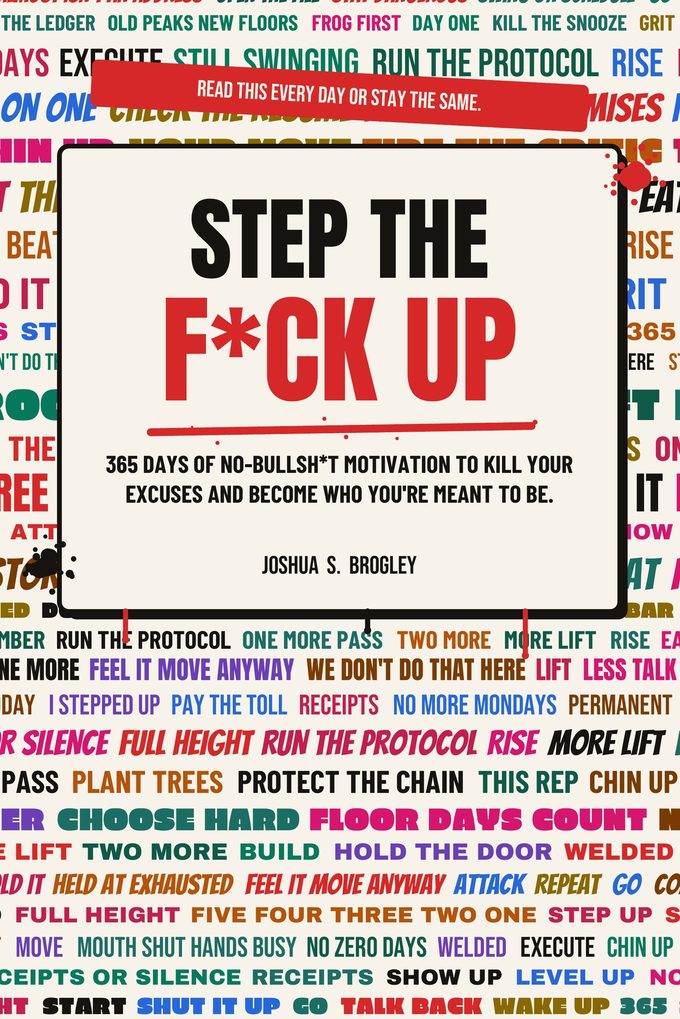
Step The F*ck Up
365 days of no-bullsh*t motivation. One page, one mission, two minutes. Miss never twice.
What is the difference between an excuse and a reason?
A reason, or constraint, has a number and can be planned around: forty minutes, forty percent, a tight budget. An excuse is the same constraint inflated into a verdict that ends the conversation. The test is whether the sentence starts a plan or stops one.
How do you stop making excuses?
Test each one against a single piece of evidence in writing: the screen-time report, the person who started later, the goal cut small. Then plan inside the real constraint and act today, before it is re-promoted tomorrow.
More on Step The F*ck Up
- Your Eulogy Is Being Written Now, in Ordinary Hours
- Why You Self-Sabotage Right Before It Works
- Why Strength Is a Life Skill, Not Vanity
- Why Sleep Comes Before Everything: Sleep Is a Performance Drug
- Why Regret Hurts More Than Failure: The Compounding Problem
The method behind every book
- Which 365-Day Book Should I Start With? A One-Minute Guide
- What Is a No Zero Day? The Rule That Saves a Bad Week
- What Is a Realistic Morning Routine? Two Minutes, Not Two Hours
All articles about Step The F*ck Up → · The book page → · All the books →
written by the author, at the kitchen table, after work.