Home / Blog / Step The F*ck Up
STEP THE F*CK UP
What Is Resilience? Not How Hard You Are Hit, but How Fast You Get Up
Resilience is the speed of the get-up, and nothing else. The book's tenth month refuses the definition most people carry, which is some kind of toughness that prevents the hit; you cannot schedule the punch, the diagnosis, the layoff, the betrayal, and no preparation moves them off the calendar. What you can train is everything that happens after impact: how long you stay down, what you say to yourself on the canvas, and how you get back up. It is a muscle rather than a mood, which means it responds to load. The ladder: define it, recognize it in your own day, face it, make a plan small enough to survive, take control by deciding once, act, and let a daily page do the repetition.
Define it, then recognize its absence
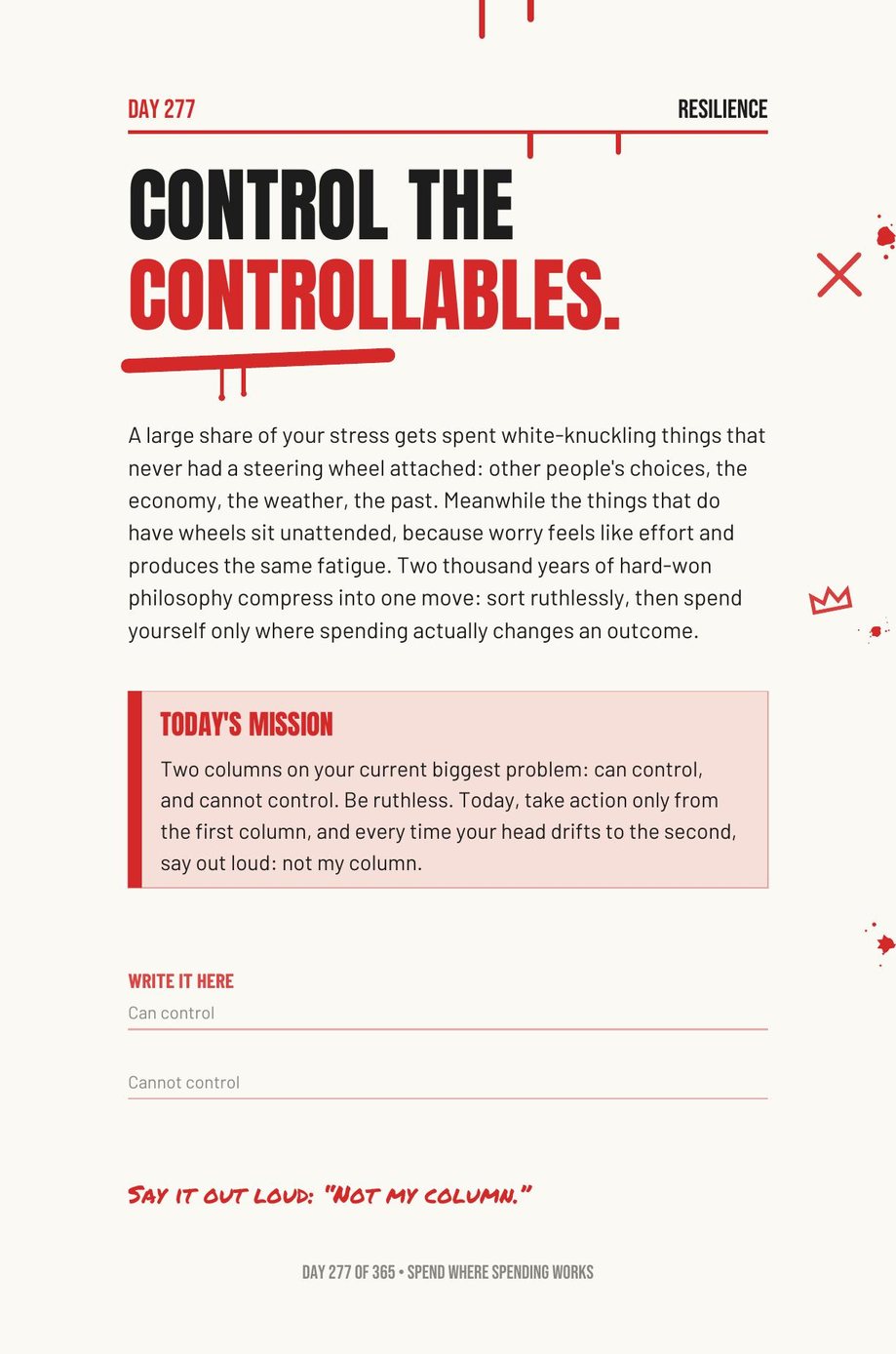
Resilience is present when a setback produces data and a next move within a bounded window. It is absent when a setback produces a verdict and an open-ended sulk: I always fail at this, and three weeks of marinating that feel like processing. The recognition test is the ratio of stress spent on things with a steering wheel to stress spent on things without one; the Day 277 page says a large share goes to white-knuckling other people's choices, the economy, the weather, the past, while the things with wheels sit unattended, because worry feels like effort and produces the same fatigue.
Face it: control the controllables, in writing
Two columns. Things in this situation that have a steering wheel, and things that do not. Most of the worry list lands in the second column, and writing it there is the face-it step, because the body was treating it as the first. Then the five-year test on what remains: will this matter in five years? Most of it fails, and the one item that passes gets the full resources. The book compresses two thousand years of philosophy into this and is not embarrassed about it.
Plan the drill, decide who you are before the storm, act on the timer
The plan is a three-step bounce routine, written in advance and rehearsed on easy days: a physical interrupt, a pre-set sulk window, the smallest next action. The decision is made on Day 299, decide who you are before the storm, because identity chosen mid-crisis is chosen by the crisis. The action is letting the timer win when the sulk window closes, every time, without negotiation, and then the Comeback Contract on Day 303 covering the day all of it fails anyway: when I get knocked flat, this is what I do.
How a daily page does this
Thirty-one pages that turn tools into a sequence, so that on the day you cannot think the body has a protocol. Month Ten, Resilience is the full month; setbacks as data, the sulk window, the bounce routine and the five-year test are the rungs; what ownership is is the definition beneath it, since a setback owned is the only kind that can be gotten up from.
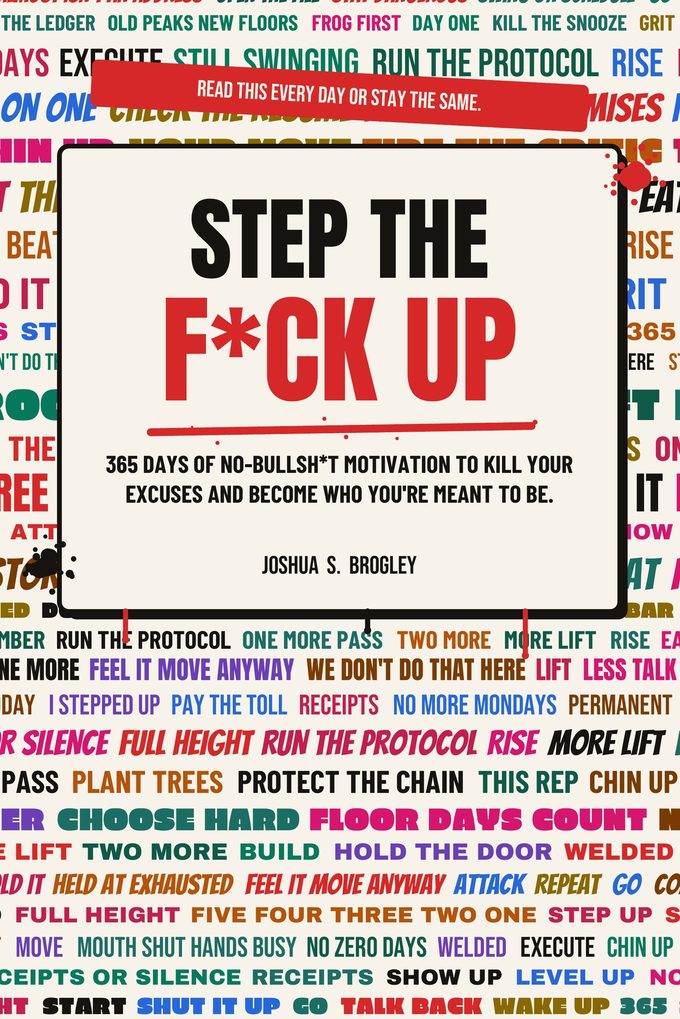
Step The F*ck Up
365 days of no-bullsh*t motivation. One page, one mission, two minutes. Miss never twice.
What is resilience in simple terms?
The speed of the get-up. You cannot prevent the hit; you can train how long you stay down, what you say to yourself on the canvas, and how you get back up. It is a muscle with a drill, not a mood.
How do you become more resilient?
Sort stress into things with a steering wheel and things without, run the five-year test, write a three-step bounce routine and rehearse it on easy days, set the sulk window in advance and let the timer win, and decide who you are before the storm.
More on Step The F*ck Up
- Your Eulogy Is Being Written Now, in Ordinary Hours
- Why You Self-Sabotage Right Before It Works
- Why Strength Is a Life Skill, Not Vanity
- Why Sleep Comes Before Everything: Sleep Is a Performance Drug
- Why Regret Hurts More Than Failure: The Compounding Problem
The method behind every book
- Which 365-Day Book Should I Start With? A One-Minute Guide
- What Is a No Zero Day? The Rule That Saves a Bad Week
- What Is a Realistic Morning Routine? Two Minutes, Not Two Hours
All articles about Step The F*ck Up → · The book page → · All the books →
written by the author, at the kitchen table, after work.