Home / Blog / Step The F*ck Up
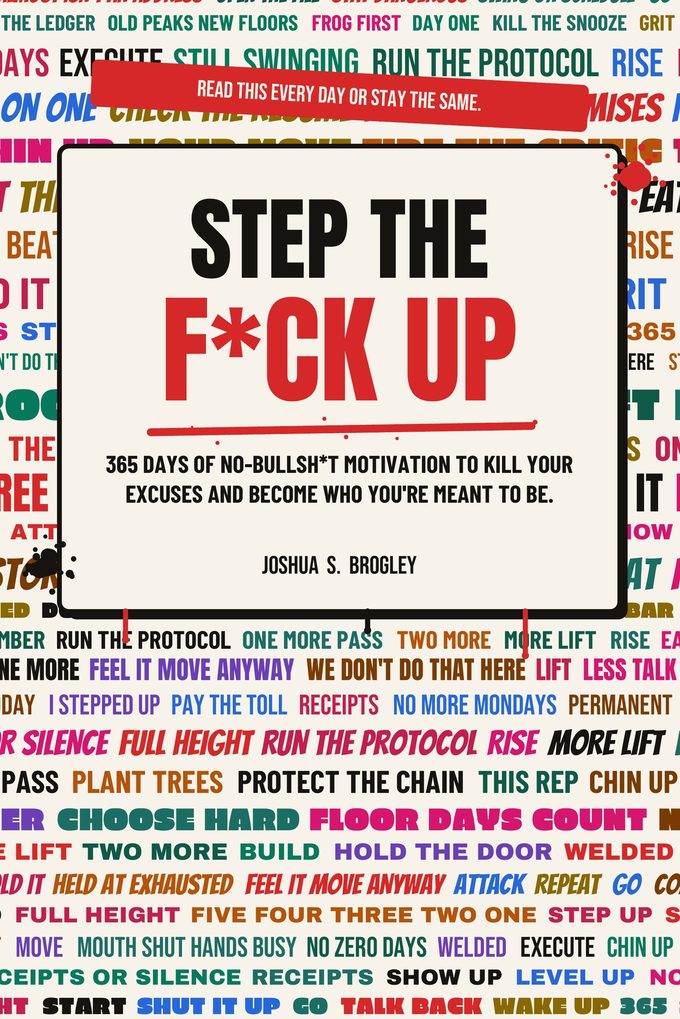
STEP THE F*CK UP
Month Ten: 31 Days of Training the Only Thing That Matters, How Fast You Get Up
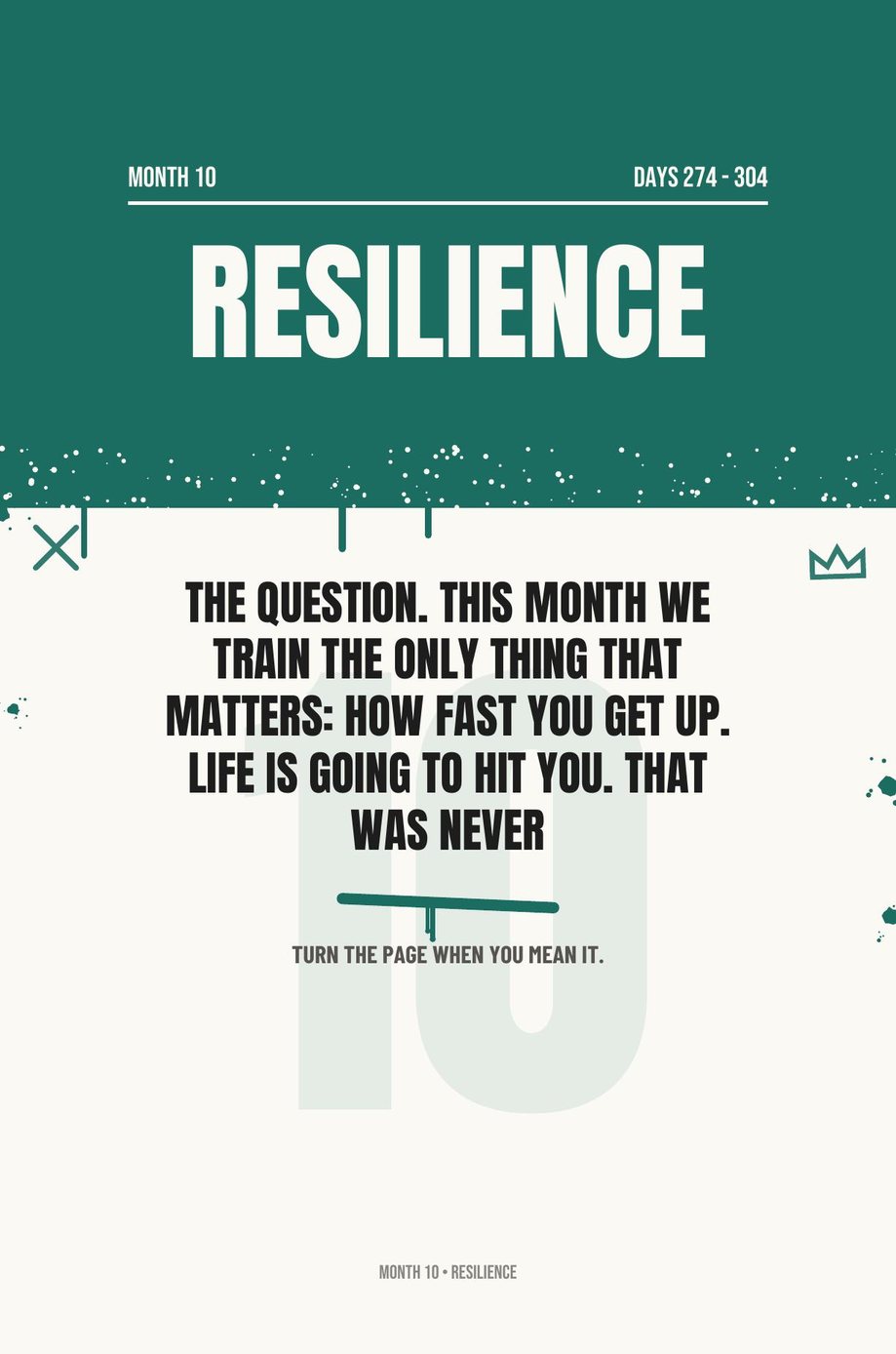
Month Ten is Resilience, days two hundred seventy-four to three hundred four, and the opener settles the question most resilience advice pretends is open: life is going to hit you, that was never the question. This month we train the only thing that matters, how fast you get up. You cannot schedule the punch, the diagnosis, the layoff, the betrayal, the call at 3 a.m. What you can train is everything that happens after impact: how long you stay down, what you say to yourself on the canvas, and how you get back up.
What the month does, in order
Day 274, the hit is coming, good: resilience is a muscle, not a mood, and responds to load. Then the tools. Setbacks are data, not verdicts; extract the lesson you already paid for. Shorten the sulk: feel it fully, on a timer set in advance. Control the controllables. Stress is a training load. Don't waste a good crisis. Build your bounce routine, a three-step drill for the minutes after impact. Run the five-year test on the worry list. Rehearse hard days on easy ones. Write the failure resume. Stop refreshing the wound. Decide who you are before the storm. Armor includes other people. And Day 303, the Comeback Contract, the shortest and heaviest document in the book.
Why resilience is drilled, not summoned
Fighters do not improvise the get-up. It is drilled until automatic: glove down, knee up, eyes on the corner, stand before eight. The book asks for the same drill for life's knockdowns and for the same reason: in the minutes after impact, a brain with a protocol moves, and a brain without one spirals and calls the spiral thinking. Every tool the drill requires was built in the first nine months. This month stops them being tools and makes them a sequence you can run when you cannot think.
The daily mechanics
Take the most recent setback and write the data it contains, not the verdict. Set the official sulk window and honor it, then let the timer win. Write the three-step bounce routine and rehearse it on a day nothing is wrong. Write the top three worries and run each through the five-year test in writing. Write the failure resume, the ventures that died and what each one built. The checkpoint on Day 289 is an armor check, and Day 300 says only: still swinging.
Go deeper into the month
Setbacks are data, not verdicts. How to shorten the sulk, feeling it fully on a timer. How to build a bounce routine, the fighter's drill. The five-year test, sorting the worry list. Plus the older posts the month produced: bouncing back after failure and getting out of a rut, and writing the failure so it teaches in the slow book. Then Month Eleven, Standards.
Step The F*ck Up
365 days of no-bullsh*t motivation. One page, one mission, two minutes. Miss never twice.
What is Month Ten of Step The F*ck Up about?
Resilience as a drilled muscle: setbacks treated as data, the sulk on a pre-set timer, a three-step bounce routine rehearsed on easy days, the five-year test on worries, a failure resume, and a signed Comeback Contract for the day everything else fails.
Can you train resilience?
Yes, and the book insists it is a muscle rather than a mood. You cannot schedule the punch, but everything after impact, how long you stay down, what you say on the canvas, how you get up, responds to load and drill.
More on Step The F*ck Up
- Your Eulogy Is Being Written Now, in Ordinary Hours
- Why You Self-Sabotage Right Before It Works
- Why Strength Is a Life Skill, Not Vanity
- Why Sleep Comes Before Everything: Sleep Is a Performance Drug
- Why Regret Hurts More Than Failure: The Compounding Problem
The method behind every book
- Which 365-Day Book Should I Start With? A One-Minute Guide
- What Is a No Zero Day? The Rule That Saves a Bad Week
- What Is a Realistic Morning Routine? Two Minutes, Not Two Hours
All articles about Step The F*ck Up → · The book page → · All the books →
written by the author, at the kitchen table, after work.