Home / Blog / Step The F*ck Up
STEP THE F*CK UP
Setbacks Are Data, Not Verdicts: You Already Paid the Tuition
Part of the series Month Ten: 31 Days of Training the Only Thing That Matters, How Fast You Get Up
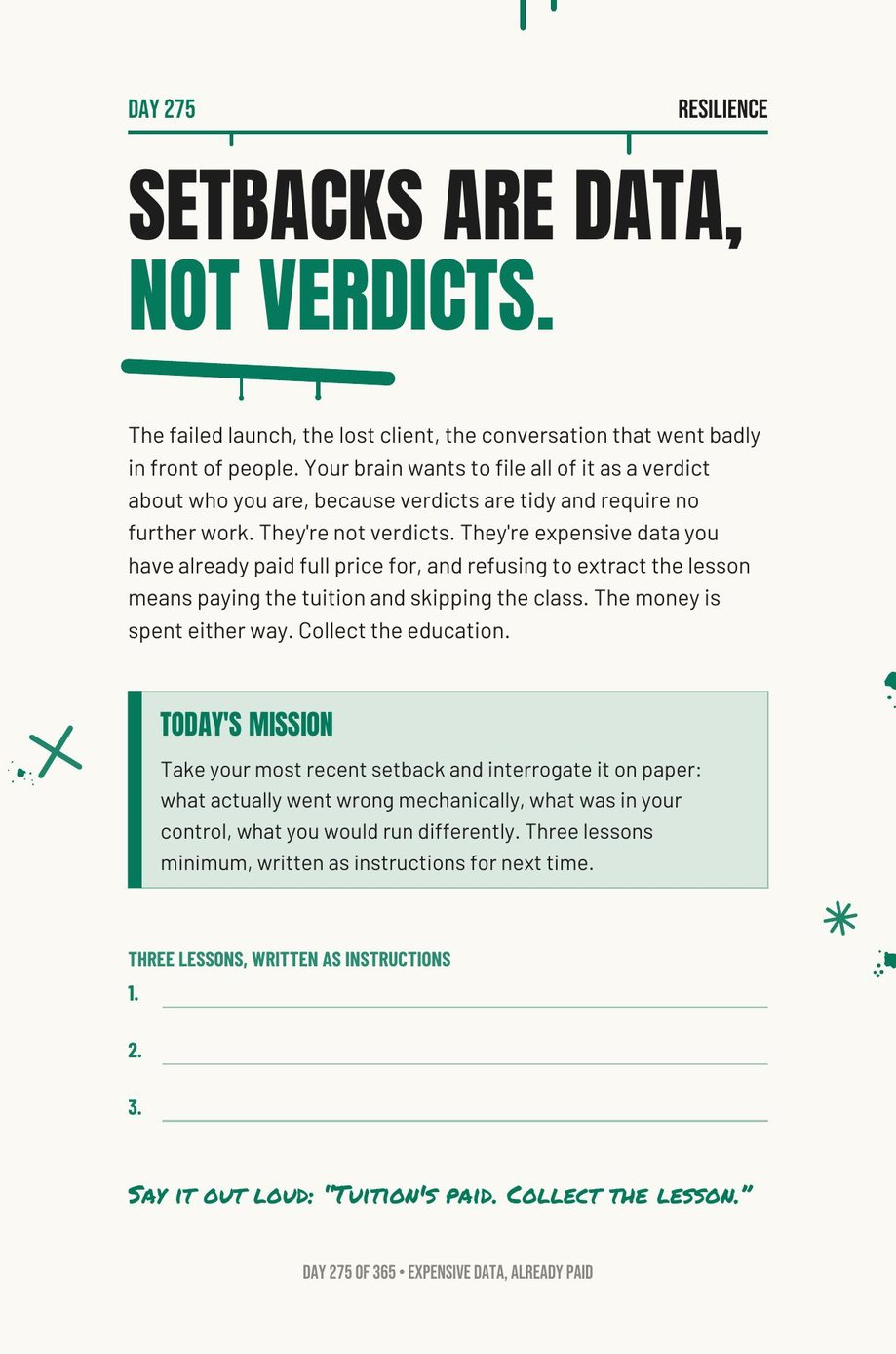
The failed launch, the lost client, the conversation that went badly in front of people. Your brain wants to file all of it as a verdict about who you are, the book's Day 275 page says, because verdicts are tidy and require no further work. They are not verdicts. They are expensive data you have already paid full price for, and refusing to extract the lesson means paying the tuition and skipping the class. The money is spent either way. Collect the education.
Why the brain prefers the verdict
A verdict closes the file: I am bad at this, I am not a business person, I always choke. Closed files require nothing further, and the brain is efficient. Data keeps the file open and demands a next move, which is work. So the verdict feels like honesty and the data feels like denial, when it is the other way around: the verdict is a generalization from one event, which is the voice's oldest trick, and the data is the only true thing in the room. Month Three's cross-examination applies: always? Name every time.
The extraction, in writing
The mission is to take the most recent setback and write three things: what specifically happened, in facts; what it tells you that you did not know before, in one sentence; and what you will do differently on the next attempt, in one action. Not what it says about you. The template is deliberately narrow because the verdict sneaks in through the wide questions, what does this mean, and cannot survive the narrow ones, what did you learn and what will you change. Three lines, and the tuition has bought something.
Why this is resilience and not positivity
Positivity says the setback was a blessing, which is a verdict wearing a smile and equally useless. The book says the setback was expensive, full stop, and that the only question is whether you walk away with the receipt or without it. That is a harder and more respectful stance: it does not ask you to feel good about the failure, it asks you to be a person who does not pay twice. The failure resume on Day 298 is the long-run version, a document of every venture that died and what each built, and it reads, years on, as the most useful thing in the book.
Where this sits
Day 275 of Month Ten, Resilience, the second page, the first tool after the premise that the hit is coming. Shortening the sulk is the next page, because you are allowed to feel it first; bouncing back is the fuller companion; the failure template in the slow book is where the data goes for good. Three lines, from the most recent hit, in a certain book that refuses to pay twice.
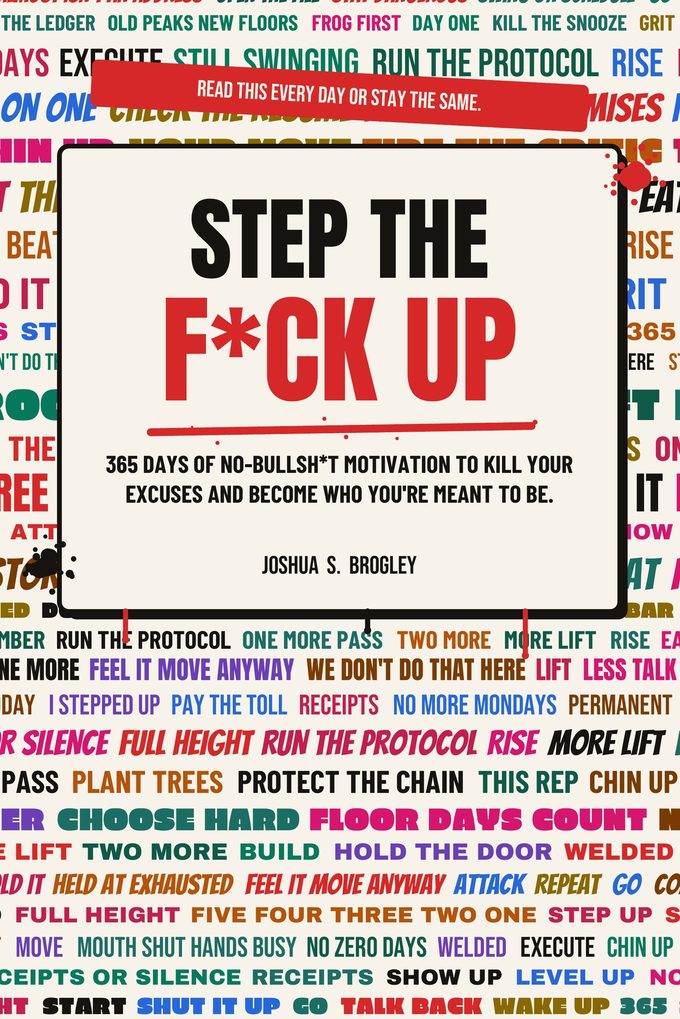
Step The F*ck Up
365 days of no-bullsh*t motivation. One page, one mission, two minutes. Miss never twice.
How do you learn from a setback?
Write three narrow things: what specifically happened, what it tells you that you did not know, and one action you will take differently next time. Not what it means about you; the verdict sneaks in through the wide question.
Why do I take failure so personally?
Because a verdict closes the file and requires nothing further, and the brain is efficient. Data keeps the file open and demands a next move. The verdict feels like honesty; the data is the only true thing in the room.
More on Step The F*ck Up
- Your Eulogy Is Being Written Now, in Ordinary Hours
- Why You Self-Sabotage Right Before It Works
- Why Strength Is a Life Skill, Not Vanity
- Why Sleep Comes Before Everything: Sleep Is a Performance Drug
- Why Regret Hurts More Than Failure: The Compounding Problem
The method behind every book
- Which 365-Day Book Should I Start With? A One-Minute Guide
- What Is a No Zero Day? The Rule That Saves a Bad Week
- What Is a Realistic Morning Routine? Two Minutes, Not Two Hours
All articles about Step The F*ck Up → · The book page → · All the books →
written by the author, at the kitchen table, after work.