Home / Blog / Lifetime Blueprint
LIFETIME BLUEPRINT
What Is a 60th Birthday Called? Diamond, and Kanreki in Japan
Part of the series Milestone Birthday Names by Year: 21st, 30th, 40th, 50th, 60th and Beyond
A 60th birthday is called the diamond birthday, after the diamond wedding anniversary, and it is the one milestone with a genuine tradition behind it in another culture. In Japan the 60th is kanreki: the sixty-year cycle of the zodiac calendar completes and the person is said to return to the calendar of their birth, a rebirth, traditionally marked with a red vest and cap like an infant's. In Korea it is hwangap, with the same meaning. In the West the 60th is diamond, or simply sixty, and it is the birthday the Lifetime Blueprint calls the start of the legacy decades.
Quick answer: A 60th birthday is called the diamond birthday, borrowed from the diamond wedding anniversary. In Japan it is kanreki and in Korea hwangap, marking the completion of the sixty-year zodiac cycle and a symbolic rebirth.
Diamond, and kanreki
The diamond anniversary is 60, and the birthday borrowed it. Kanreki is older and more interesting: the traditional East Asian calendar combines ten heavenly stems and twelve earthly branches into a sixty-year cycle, so at 60 a person has lived one complete cycle and starts again, which is why the celebration uses the red of a newborn. Whether or not the tradition is yours, the idea underneath it is exactly right: 60 is a beginning wearing the costume of an ending.
What 60 opens
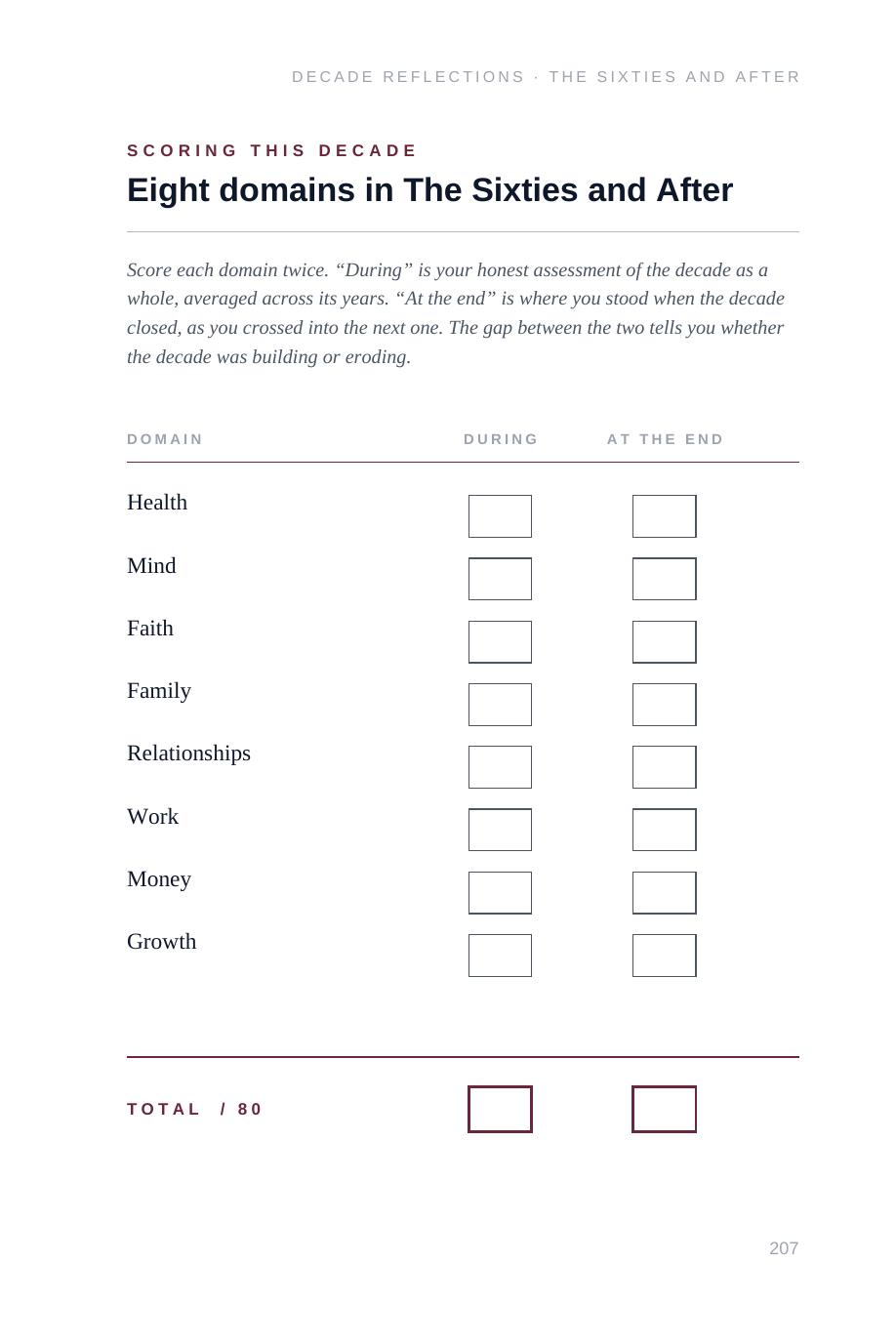
The decades the book combines into one chapter, the Sixties and After, because past 60 the unit of meaningful change is less often a decade than a season, a relationship, a project completed or set aside. Legacy in the quiet sense: what has been built, what has been understood, what has been forgiven, what has been passed on. The chapter's instructions are the plainest in the book: tell the stories often, keep walking and reading, keep one non-negotiable practice, keep learning, forgive yourself for what you would have done differently, and be the elder you would have wanted to know at 25.
What to do at 60
The book's own worked example is a reader at 63 scoring an ideal for the whole rest of life, seventy onward, in all eight domains, and naming the gap. That sitting decides what the sixties get spent on and it is the reason the book says 60 is nowhere near too late to start writing a life down; the sixty-year-old holds the most irreplaceable material of anyone. Then the letters: to a grandchild who may not yet exist, to whoever finds the book, and the Final Letter, written while it can be written well. Life after sixty is the chapter; not too late is the argument; the Final Letter is the page most people at 60 are quietly thinking about.
The other milestones
All the milestone birthday names. Neighbors: the 50th, golden and the 70th, platinum. For the gift, the retirement gift is usually the same person a few years on.
Lifetime Blueprint
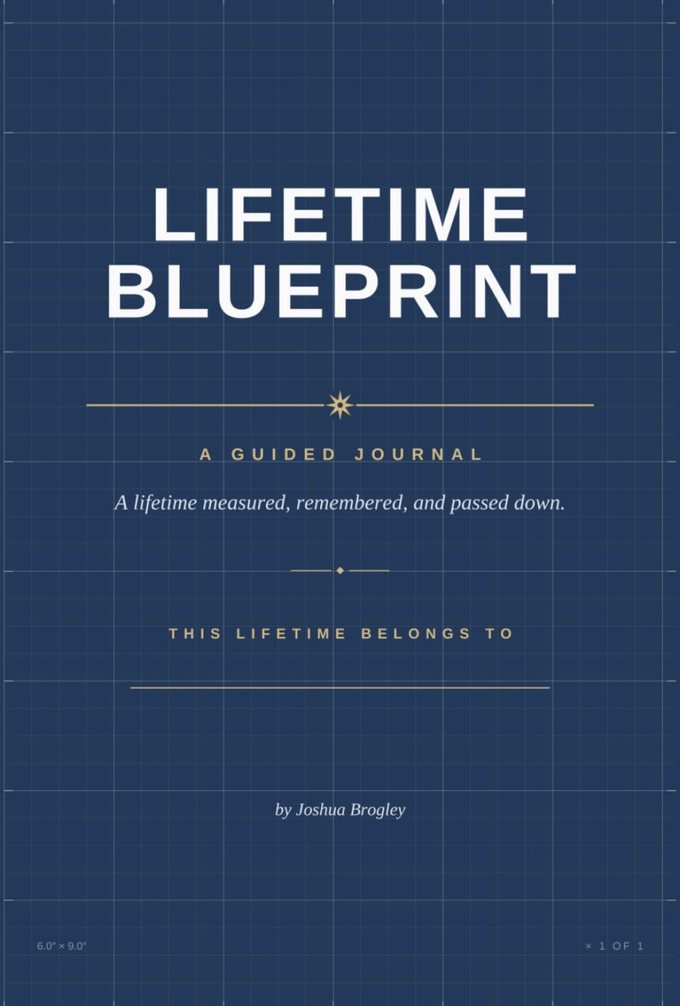
The hardcover built to be inherited: eight life domains scored across decades, thirty life-event templates, and letters written forward, ending in a Final Letter.
What is a 60th birthday called?
The diamond birthday, borrowed from the diamond wedding anniversary. In Japan it is kanreki and in Korea hwangap, the completion of the sixty-year zodiac cycle, celebrated as a rebirth.
What is kanreki?
The Japanese 60th birthday celebration. The traditional calendar runs in sixty-year cycles, so at 60 a person returns to the calendar of their birth; the celebration uses red clothing like an infant's to mark the new beginning.
More on Lifetime Blueprint
- Why Most People Will Never Write Their Life Down
- Your Fifties: The Distillation Decade, Subtraction Over Addition
- Your Forties Are a Recalibration, Not a Crisis
- Your Thirties: The Building Decade, When Time Starts to Feel Finite
- Your Twenties: The Decade of Compounding Choices
The method behind every book
- Which 365-Day Book Should I Start With? A One-Minute Guide
- What Is a No Zero Day? The Rule That Saves a Bad Week
- What Is a Realistic Morning Routine? Two Minutes, Not Two Hours
All articles about Lifetime Blueprint → · The book page → · All the books →
written by the author, at the kitchen table, after work.