Home / Blog / Lifetime Blueprint
LIFETIME BLUEPRINT
Which Area of Your Life Should You Fix First?
Part of the series The Eight Domains of Life, Scored: The Complete Guide
When everything needs work, the order is not a matter of taste. Health goes first, not because it is the most virtuous area but because it is the substrate: sleep, energy and a functioning body are the operating system every other domain runs on, and improvements attempted on a failing substrate keep sliding off. Then one area at a time, thirty days each, chosen by damage rather than by ambition. There are exactly two exceptions, and they are both fires.
Try it: get a suggested fix-first order for your own scores with the free life scoring tool.
The substrate argument
Try fixing money on five hours of sleep and watch discipline lose to biology by Thursday; try repairing a marriage while running on empty and watch patience, the actual currency of repair, fail to load. This is not health-guru moralizing, it is dependency mapping: every domain draws on energy, mood and cognition, and those are manufactured in exactly one place. Health first is the order that makes every subsequent fix cheaper. It is also why health does not need to reach excellent before moving on; it needs to stop taxing everything else.
The two legitimate exceptions
Fires jump the queue. Money in genuine crisis, not messy but crisis, eviction-and-collections crisis, gets handled first because that stress degrades the substrate faster than exercise can rebuild it. A key relationship in active collapse gets triage before optimization anywhere else, for the same reason. The test for fire versus mess: is it getting worse this month on its own? Mess waits its turn politely. Fire does not.
Score before you choose, because feelings misreport
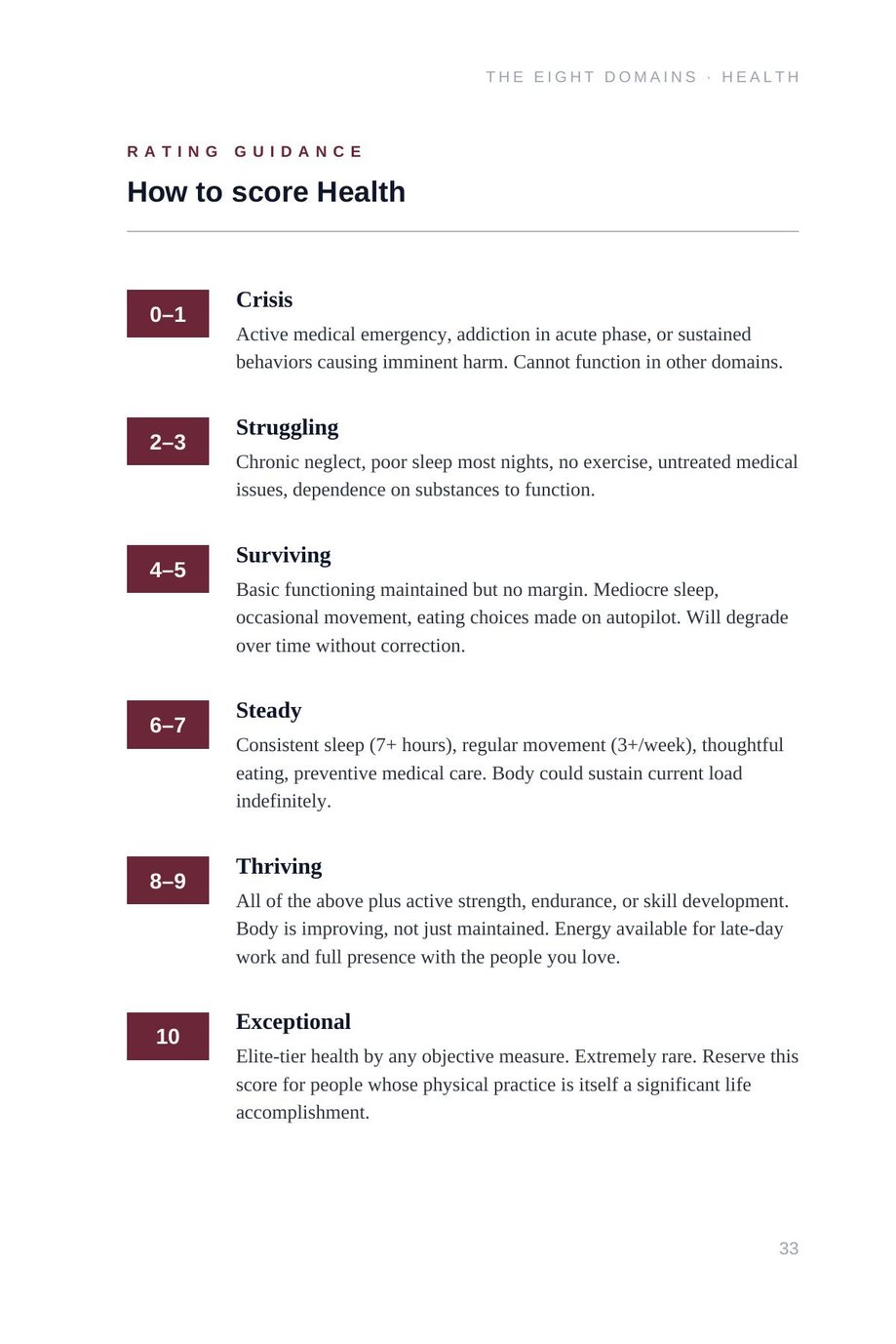
The area that feels most broken is often just the loudest, and the quiet one, usually friendships or the body, has been decaying politely for years. Ten minutes of honest scoring across the standard eight areas, each with a line of evidence, routinely reorders the priority list. Anchored guidance helps here: knowing what a crisis-level score looks like versus a stable one, in observable terms, keeps the choosing honest, and honest is the hard part.
Thirty days each, in sequence, on record
One area gets the next thirty days of small daily moves; the rest get maintenance only, which takes actual discipline because ambition wants all eight at once, and all eight at once is how the previous three attempts died. The sequencing engine is covered in getting your life together; the scores themselves belong somewhere permanent, dated, returnable, so that next year's triage starts from this year's map instead of from zero. A certain hardcover exists to be exactly that map, with the rating guidance printed beside every domain.
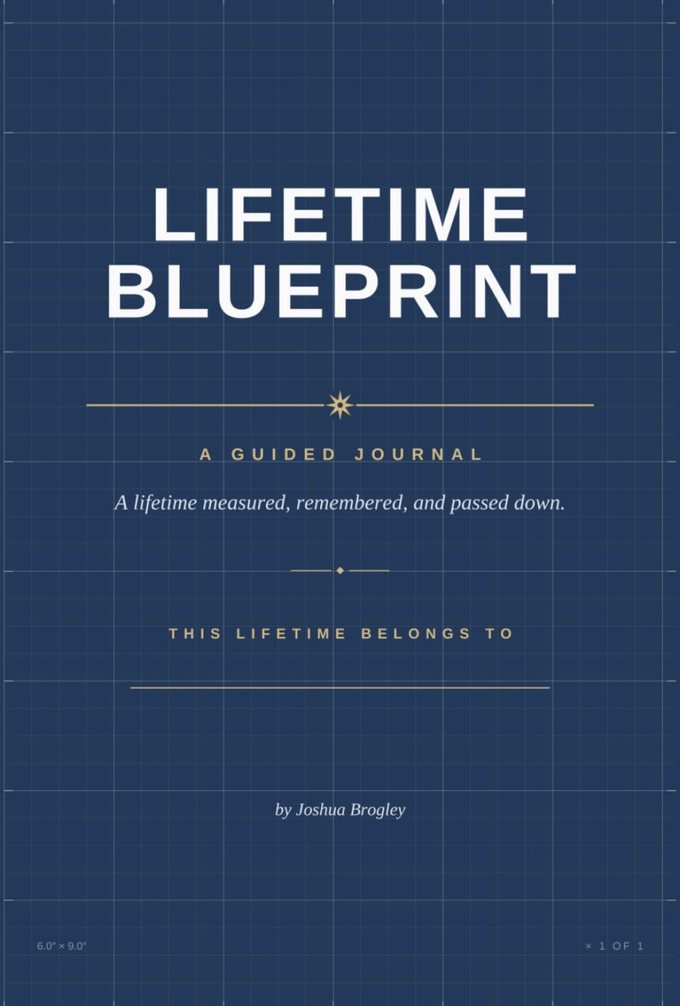
Lifetime Blueprint
The hardcover built to be inherited: eight life domains scored across decades, thirty life-event templates, and letters written forward, ending in a Final Letter.
What part of my life should I improve first?
Health, in almost all cases, because energy, sleep and a working body are what every other improvement runs on. The exceptions are genuine fires: financial crisis or a key relationship in active collapse, which take triage first.
Should I work on everything at once or one thing at a time?
One area for thirty days, the rest on maintenance. Parallel self-improvement fails because every domain draws on the same limited energy; sequential fixes compound, and the finished area funds belief for the next.
More on Lifetime Blueprint
- Your Twenties: The Decade of Compounding Choices
- Your Thirties: The Building Decade, When Time Starts to Feel Finite
- Your Forties Are a Recalibration, Not a Crisis
- Your Fifties: The Distillation Decade, Subtraction Over Addition
- Why Most People Will Never Write Their Life Down
The method behind every book
- Which 365-Day Book Should I Start With? A One-Minute Guide
- What Is a No Zero Day? The Rule That Saves a Bad Week
- What Is a Realistic Morning Routine? Two Minutes, Not Two Hours
All articles about Lifetime Blueprint → · The book page → · All the books →
written by the author, at the kitchen table, after work.